news Markets & trade Splash247
For one of the largest countries by area and the most populous country in the world, India’s ambitious shipbuilding targets should come as no surprise. However, the steep path it has to climb to reach these lofty goals should not be underestimated. India is currently outside the top 15 with a market share of only 0.07%. To become a top 10 player by 2030 as stated repeatedly by the Narendra Modi administration will require a huge amount of investment. KPMG said that to reach the 2030 goal, the annual output of Indian shipyards needs to be increased from 0.072m gt to 0.33m gt by 2030 and to 11.31m gt a year by 2047 if its to make good on its top five goal. This is a very tall order, especially given the utter dominance of rival China in the shipbuilding sector. China commands 64.7% of global shipbuilding orders while the countries in second and third place – South Korea and Japan – have only 30.8% combined. Those kinds of numbers from the top three shipbuilding countries leave the rest of the world fighting for scraps and having a market share in the single-digit percentile could be seen as a success. With so little of the market left for everyone else India has a rocky road to a higher market share and earning a better ranking in the shipbuilding world. India’s competitive edge lies in its ability to cater to smaller vessels Nevertheless, Eric Veith, regional chief executive for South Asia at Bureau Veritas Maine and Offshore, believes that the Indian shipbuilding industry has a unique opportunity to reach these strategic goals due to significant growth in the previous four years. “India’s competitive edge lies in its ability to cater to smaller vessels, a segment largely neglected by shipbuilders in China, Korea, and Japan. These countries typically focus on large, complex ships, leaving a gap for Indian shipyards to develop a reasonable share of the global newbuilding order in this segment,” he explains. One of the key drivers behind India’s maritime growth was the publication of the Maritime India Vision 2030 in 2021. This set a roadmap for expanding the country’s maritime industry capabilities, focusing on infrastructure and education of seafarers, technology, policy, shipbuilding, repair and recycling. The vision is supported by government incentives that make Indian shipyards more competitive compared to their counterparts in East Asia. These incentives, together with India’s relatively low labour costs, are already starting to attract foreign shipowners, according to Veith. This is mostly used by shipowners looking for simple designs as well as small to medium-sized vessels such as Germany’s Carsten Rehder Schiffsmakler which ordered four 7,500 dwt MPPs with an option for four more earlier this year. The contract was won by Garden Reach Shipbuilders and Engineers, a yard under the administrative control of the country’s ministry of defence, best known for its defence shipbuilding which like several other Indian shipyards decided to diversify its offering and attract foreign shipowners. Dr Adam Kent, managing director of British consultancy Maritime Strategies International (MSI), agrees that smaller vessel construction is one of India’s positives, regardless of the country’s global shipbuilding output of merchant ships averaging around 0.1% annually since 2000. “Despite this, the country boasts a well-established marine shipbuilding industry, though its primary focus is on smaller tonnage vessels like general cargo carriers, MPPs,
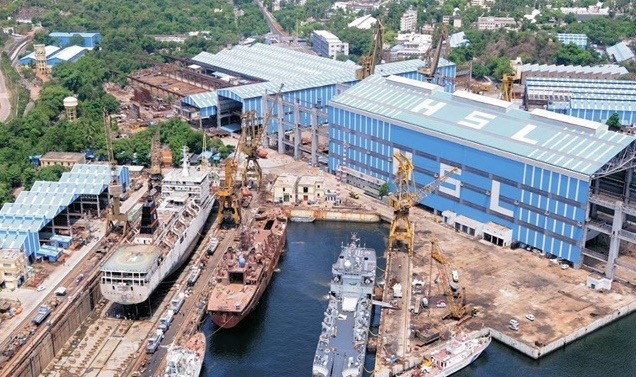
Can India reach its ambitious shipbuilding targets?
Splash247
Read full article at Splash247 →
Opens Splash247 in a new tab

