pi_circular Operational riskCompliance & regulation Britannia P&I
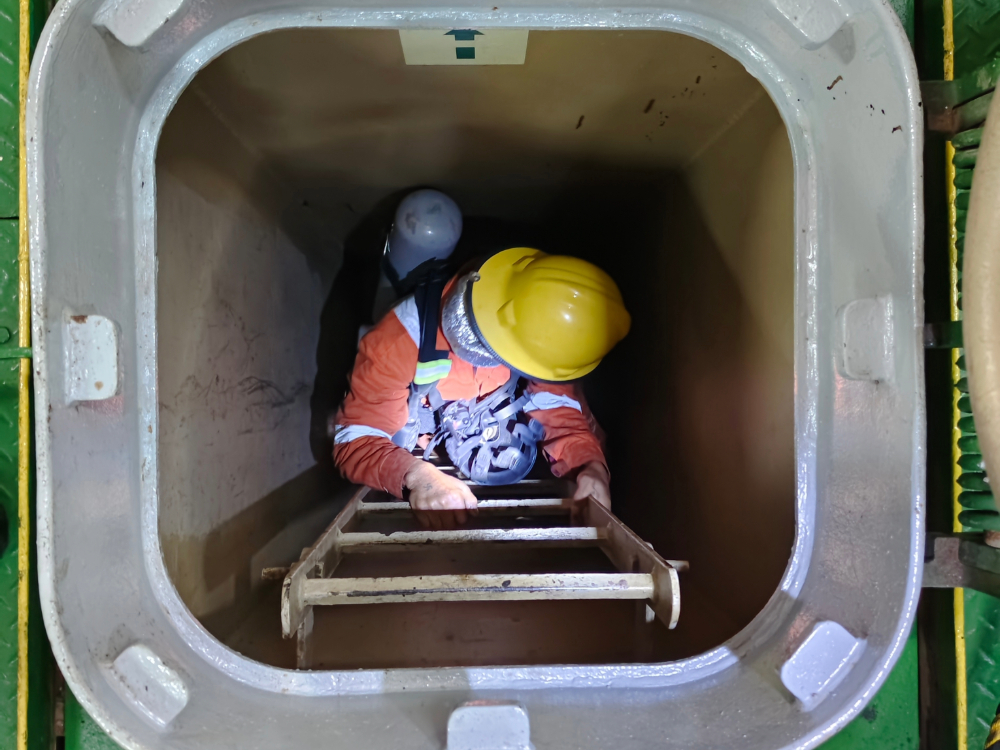
REVISED TRAINING RECOMMENDATIONS FOR ENTERING ENCLOSED SPACES Published: 15 October 2025 Revised Training Recommendations for Entering Enclosed Spaces Aboard Ships Enclosed space entry continues to present a risk of fatal injury to ship’s crew and external visitors. Acknowledging this, the International Maritime Organization (IMO) has been working to improve their Resolution A.1050(27) Revised Recommendations for Entering Enclosed Spaces Aboard Ship s with an amendment adopted at the recent 110 th Maritime Safety Committee meeting. The update is extensive with notable changes in the recommendations for training of personnel with responsibilities during enclosed space entry, where additional criteria have been listed under the minimum training requirements. As before, the resolution states that “Only trained and authorized personnel should be assigned the duties of entering, functioning as attendants or acting as members of rescue teams.” Areas of amended training focus are: Hazard Identification The ship-specific ‘Enclosed Space Register’ is a useful place to search for information on any space to be entered. The amendment has expanded and clarified the contents of the register, specifying the need to identify the expected hazards, amongst other valuable information for each enclosed space on board. It is important to become familiar with the contents of this register. The amendment reaffirms that oxygen depletion can be expected to occur continuously and rapidly within unventilated enclosed spaces. Any interruption in ventilation to a space, for example a supply fan stopping, will quickly result in oxygen depletion. All personnel involved in an enclosed space entry should be aware of this possibility and be ready to leave the space should this occur. The attendant positioned at the entrance to the space should relay this information immediately should they become aware of ventilation interruption. Oxygen depletion is not the only atmospheric hazard that can b
Revised Training Recommendations for Entering Enclosed Spaces
Britannia P&I
Read full article at Britannia P&I →
Opens Britannia P&I in a new tab