pi_circular Safety & casualtyOperational risk West of England
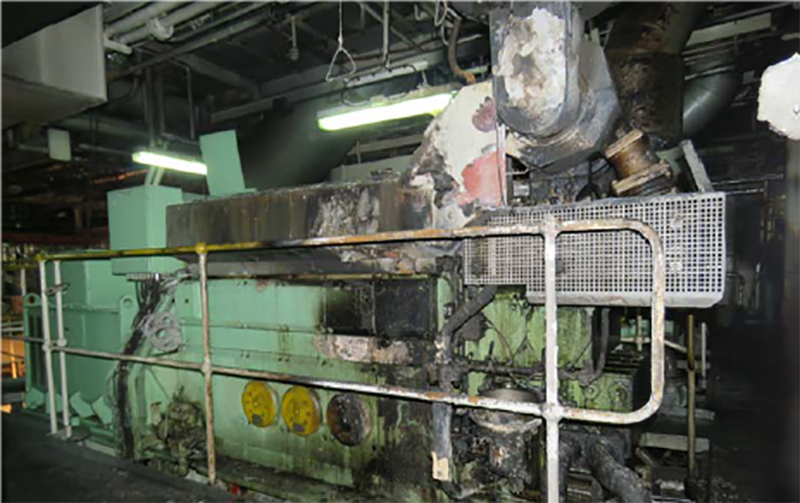
News 25 Jul, 2019 Engine Room Fire Safety - Condition survey findings It is well known that fires on ships require a lot of effort to combat, put all those on board in a life-threatening situation and present extreme danger to the vessel. Engine room fires are particularly difficult to tackle due to the possibly confined nature of the scene and an abundance of fire triangle elements: heat, fuel and air. A fire in the engine room can have disastrous consequences and is best prevented by all available means. Condition surveys conducted by the Club repeatedly expose worrying examples of substandard fire safety in engine rooms which are entirely avoidable. Primary sources of ignition in the engine room include hot exhaust manifolds of engines, boilers and indicator valves of the engines. When flammable liquids leak on, splash over, or are sprayed onto an exposed high temperature surface they can auto-ignite. Reportedly up to 70% of all engine room fires are set off by fuel leaks. SOLAS Ch II-2 Reg 4 para 2.2.6 requires that surfaces with temperatures of 220°C and above must be properly insulated. Exhaust gas casing, indicator valve shields and lagging degrade with time due to vibration, repeated heating and cooling down or disassembly and refitting during maintenance. The crew must make sure that high temperature surfaces are adequately protected at all times when there is a risk of flammable oils being sprayed over the surface. The importance of engine room cleanliness and a general fire safety culture cannot be overemphasized. Damaged and missing insulation of the engine exhaust gas turbocharger and uptakes Oil stained engine entablature Oily bilges in the Engine Room 1 / 3 Dirty bilges, stained engine entablature and makeshift solutions such as leak collectors and plastic hoses may be set on fire by hot work such as welding or grinding. These will also provide an additional source of fuel to sustain and spread an engine room fire. Proper housekeeping along with
Engine Room Fire Safety - Condition survey findings
West of England
Read full article at West of England →
Opens West of England in a new tab