market_report Tanker Markets & tradeGeopolitical risk Splash247
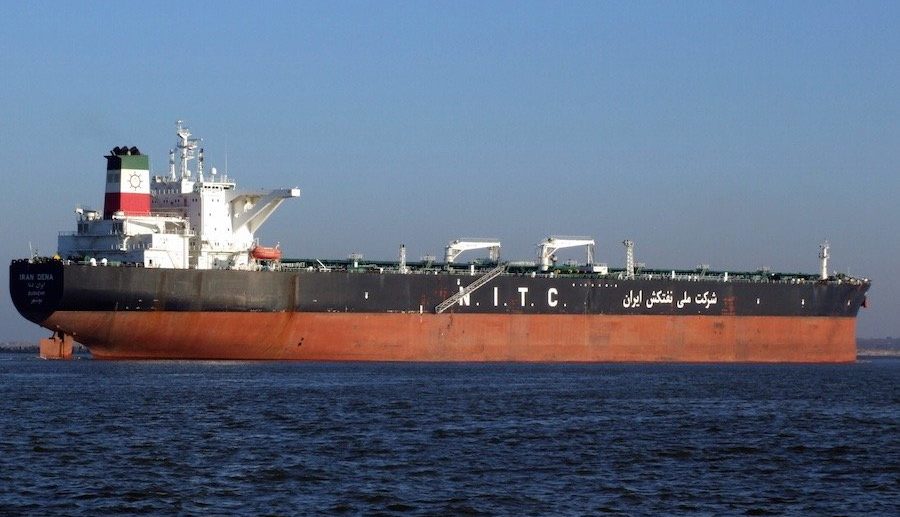
Tankers Donald Trump’s so-called maximum pressure on Iran’s oil business is squeezing the number of compliant VLCCs, pushing utilisation for supertankers into the sweet spot 90% territory. In his first two months back in power, Trump has issued four rounds of sanctions against Iran, including many tankers, a Chinese refinery in China and even a ship that was bound for demolition in Bangladesh. The VLCC fleet now includes 111 sanctioned tankers, of which 37 were added starting in late 2024 under President Biden and 17 over the past two months under Trump. “Capacity utilization in the VLCC fleet continues to push closer to 90% and spot rates have responded,” Jefferies noted in a recent report, up from 83% six months ago. “We think that the sanctions on Iran’s shadow fleet could benefit compliant VLCC as supply tightens,” HSBC stated earlier this month. “Sanctioned ships may be forced out of rotation, potentially tightening vessel availability,” Braemar forecast, noting how in January and February this year, the 101 tankers sanctioned by the US in 2024 for their involvement in Iranian oil markets had loaded just nine cargoes, all of them Iranian oil. “Iran could face more challenges selling its oil, even at a steep discount. A reduction in Iranian exports create opportunities for other Middle Eastern or West African exporters to expand sales. Everything else being equal, this will boost employment opportunities for mainstream VLCCs,” Poten & Partners suggested. In his first term, Trump withdrew the US from the Iran nuclear deal and reimposed a full embargo on Iran’s crude oil exports in 2019. As a result, Iran’s crude oil shipments collapsed from 2.5m barrels per day in the first half of 2018 to 250,000 barrels per day. During the Biden administration, sanctions were not as strictly enforced and Iranian exports gradually recovered. Dry Bulk Iron ore exports out of Africa are set to be one of the great growth drivers of global seaborne trades for the rest of the 2020s, new research from broker SSY shows. Guinea’s Simandou mine alone is set to deliver 60m tonnes of iron ore in its first full year, with production, due to start in 2025, expected to double to 120m tonnes the following year, according to Guinea’s Mines and Geology minister. The project is expected to contribute to 10% of China’s seaborne iron ore demand annually. Just 200 km away, Ivanhoe Atlantic’s Kon Kweni project is expected to produce up to 5m tonnes of iron ore when its first phase opens next year, with second phase expansion expected to see this figure rise up to 30m tonnes a year. “Beyond these larger mines, Africa is bustling with smaller yet promising projects,” SSY said in a monthly markets update, noting Genmin’s Baniaka project and Fortescue’s Belinga project, both in Gabon, as well as ArcelorMittal’s Western Range expansion in Liberia, and Jindal Africa’s project in Namibia. “As West Africa’s mines muscle out higher-cost producers elsewhere, particularly in Australia, the global trade map for iron ore is set for a redraw,” SSY suggested, something could see a “notable uptick” for capesize tonne-mile demand. “On the panamax front, Liberia’s newfound iron ore wealth could reshape Europe-bound trade flows, potentially displacing high-cost Canadian exports,” SSY added. Containers Containership utilisation has slipped below 90% on many of the sector’s biggest tradelanes, while the gap between box freight rates and charter rates hit an all-time high this month. Data fro
Analyst Abstract

Splash247
Read full article at Splash247 →
Opens Splash247 in a new tab