casualty_report Container Safety & casualtyOperational risk Splash247
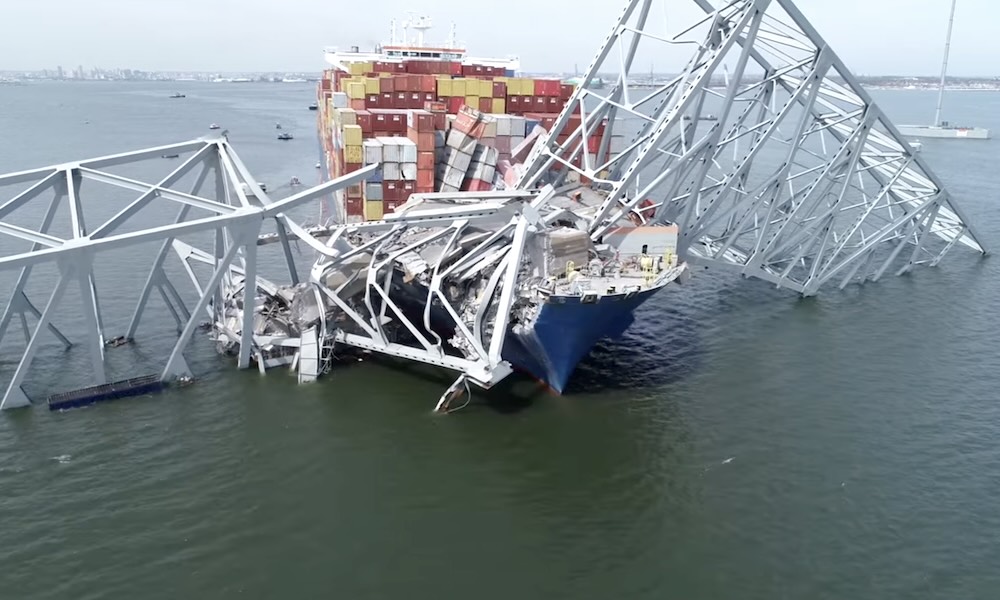
The National Transportation Safety Board (NTSB) in the US has released the audio transcript from the Dali containership’s voyager data recorder (VDR) on the night of March 26 last year when it slammed into Baltimore’s largest bridge, creating one of the most high-profile shipping accidents of the decade to date. The minutes leading up to the Dali’s catastrophic collision with the Francis Scott Key Bridge involved a series of routine navigation activities, technical difficulties, and finally, a critical failure that led to the accident. At 01:24:59 having left Seagirt Marine Terminal in Baltimore with two pilots onboard, an automatic power changeover circuit engaged, followed almost instantly by multiple loud bridge alarms—a clear sign of a critical electrical fault. This marked the start of the first blackout event that would eventually lead to the collision with the bridge and the deaths of six workers who were patching up the bridge that night. The VDR recorded an expletive from the lead pilot and a second officer call from the master, confirming a sudden problem. The ship had already suffered similar electrical faults hours before while at berth. Although steering appeared initially functional—the helmsman responded to commands—questions arose about system reliability. The master and pilot began issuing urgent instructions: confirming crew readiness on the bow and attempting to assess power loss. The training pilot began making emergency radio calls to secure tug assistance and notify authorities. Within moments, the pilot called for the Key Bridge to be shut down, urgently contacting the Association of Maryland Pilots dispatcher. Simultaneously, the pilot attempted to contact tugboats for assistance via VHF channel 14, while also giving shouted orders to deploy the port anchor. The master echoed these commands, and the crew forward struggled to comply, citing mechanical resistance. At 01:27:25, a security call was made by the training pilot, stating: “Container ship Dali has lost power, approaching the Key Bridge.” Shortly after, the pilot yelled, “Do we have a bow thruster?” The bridge team responded initially “yes,” then seconds later, “not working.” At 01:28:59, the sound of the anchor chain running was recorded—possibly the final desperate attempt to halt the ship. Just seconds later, at 01:29:15, the VDR recorded the sound of a massive rumble—the collapse of the Francis Scott Key Bridge. The bridge crew reacted with shock and profanities, the VDR transcript shows. The pilot and training pilot immediately issued Mayday-style distress calls to the Coast Guard, reporting the bridge had fallen and requesting immediate assistance. Post-collision, alarms blared. The crew confirmed there were no injuries onboard and began checking for structural damage and leaks. The pilot and training pilot acknowledged they’d been operating under standard procedures when the blackout struck, affirming that steering and speed were normal up until the power loss. Their focus shifted to safety, emergency response, and coordination with the US Coast Guard. This sequence reveals a sudden, catastrophic systems failure—likely electrical in nature—following a routine and well-coordinated departure. Despite timely reactions, the vessel’s crew and pilots were unable to prevent the collision due to cascading failures in propulsion and maneuvering systems. The NTSB in May last year released a preliminary report into the Dali’s fatal allision with Baltimore’s la
Dali VDR transcript released
Splash247
Read full article at Splash247 →
Opens Splash247 in a new tab


