news Compliance & regulationSafety & casualty Marine Insight
Over 90% of the world’s merchant shipping tonnage is classified by the 12 member societies of the International Association of Classification Societies (IACS). Dedicated to safe ships and clean seas, IACS makes a unique contribution to maritime safety and regulation through technical support, compliance verification and research and development. IACS was formed in 1968 to promote high standards in safety, prevent pollution and liaise closely with the shipping industry and organisations. IACS members classify many ships, and most international administrations use the IACS members’ rules and regulations as the basis of their fleet’s license to operate, including compliance with mandatory requirements. The members conduct surveys annually and play an active part in the workings of the IMO. It has a voice in the development of international conventions and also in providing technical support to member states of the IMO. IACS eliminates substandard ships and increases the sophistication of ship design and operations. IACS members include ABS (US of A), BV (France), CCS (China), CRS (Croatia), DNV GL (Germany), IRS (India), KR (South Korea), LR (UK), PRS (Poland), RINA (Italy), RS (Russia) and ClassNK (Japan). The Contribution of IACS With its extensive knowledge of the industry and fleet, IACS contributes to international shipping and regulations, depending on the input from members. Although it is a non-governmental organisation, it holds a consultative status with the IMO and regularly participates in the capacity of an observer as well as an adviser to the IMO and the member states. This includes participation in the Maritime Safety Committee (MSC), Maritime Environment Protection Committee (MEPC), International Safety Management (ISM), as well as any other sub-committees and such. IACS had a vital role in the implementation of ISM, a mainstay in the shipping industry today, wherein IACS developed guidelines and provided interpretations of the ISM Code. Having the majority of the world’s fleet under its purview and the extensive knowledge associated with it, IACS also enables cooperation with the Port State Control (PSC) to ensure high quality in the maritime field. In the ever-increasing world of regulations and paperwork, IACS members support and comply with the regulatory demands. Enhance Survey Programs The ESP was introduced for oil tankers and bulk carriers by the IACS in 1993. Included in SOLAS Chapter 9, it came into full effect in 1996. The ESP requires planning (in advance) of periodical classification surveys and associated minimum requirements with increasing stringency and maintenance of onboard documents. While it might seem cumbersome, it increases the efficiency of merchant shipping and reduces risks associated with regard to the same. Its motto of safe ships and clean seas is indeed adhered to with the enforcement of such standards. Transfer Of Class This agreement to prevent the transfer of the class was enforced in 1995. The objective was to prevent the transfer of a ship from one class with one IACS member to another to avoid unnecessary surveys and repairs. Under this agreement, the transfer can happen only if the pending classification surveys and associated documentation have been completed. All such transfers are promulgated to PSC organisations and other parties of interest. IACS Activities Ship Classification Services Classification is essential to the structural and engineering design, construction and operation
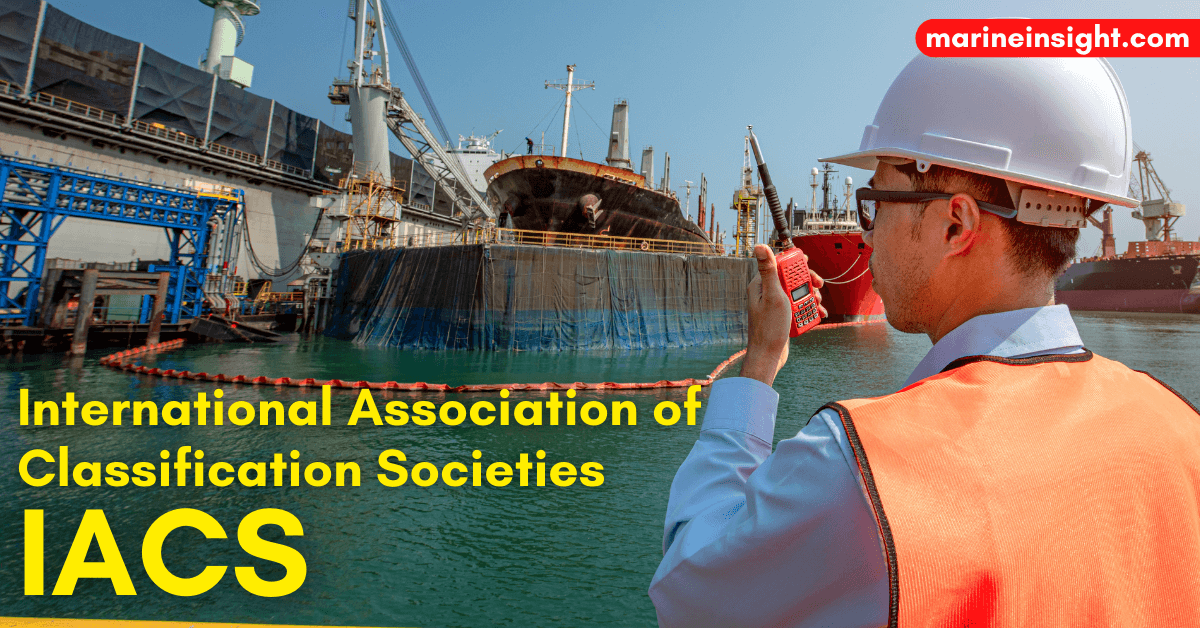
What Is International Association Of Classification Societies (IACS)?
Marine Insight
Read full article at Marine Insight →
Opens Marine Insight in a new tab