news Safety & casualtyGeopolitical risk Splash247
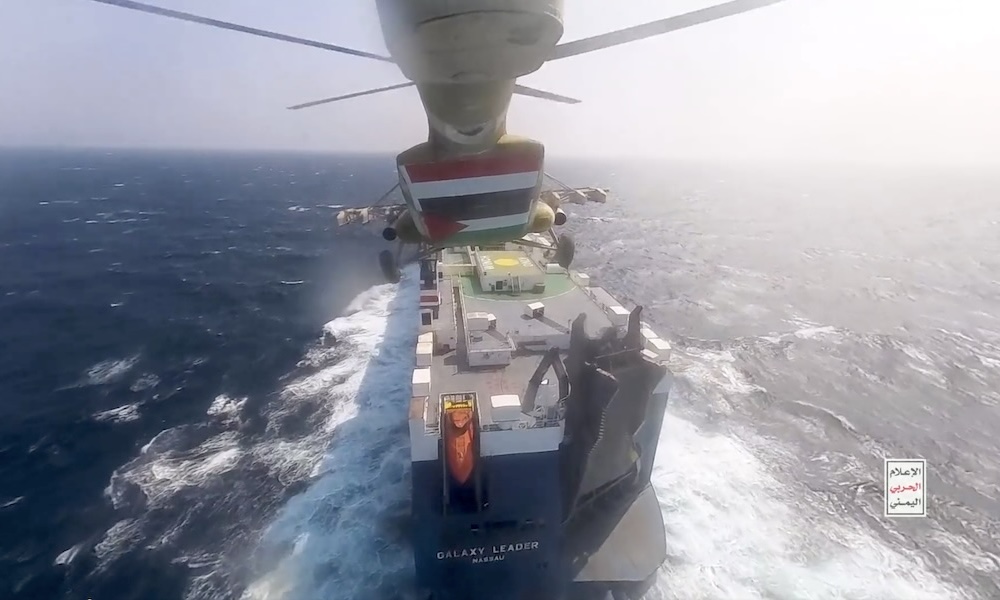
The Houthi attacks on merchant vessels are wreaking havoc on shipping in the Red Sea in almost every metric imaginable. From officer supply shortages at an all-time high, sailor deaths, and the number of attacks to a statistic that might not be in the forefront as much as the others – Egypt’s financial woes resulting from a decrease in Suez Canal passages. Suez Canal, a sea-level waterway running north-south across the Isthmus of Suez in Egypt to connect the Mediterranean and the Red seas, separates the African continent from Asia and is the shortest maritime route between Europe and the lands lying around the Indian and western Pacific oceans. The 193 km canal between Port Said in the north and Suez in the south is an integral part of Egypt’s economy. After Egypt expanded the canal in 2015, the country started raking in billions which hit a record $9.4bn in the fiscal year that ended on June 30, 2023, which was a staggering increase of 35% over the previous year. For comparison, the entire GDP of Egypt for 2022 was $476.7bn. That means the Suez alone accounts for just over 2% of Egypt’s entire GDP. Canal revenues will decline by 50% in the current fiscal year According to the International Monetary Fund (IMF), in peacetime conditions, the Red Sea and the Suez Canal account for about 15% of global trade and 30% of global container traffic. Using any other route comes with increased costs and delays, mostly for European supply chains. For example, a containership going from Shanghai to Rotterdam via the Suez will be a trip of around 10,600 nautical miles and last about 27 days at a constant speed of 16 knots with no ports of call. But such a trip will most often take around 35 days with up to 10 ports of call. The best alternative route, around the Cape of Good Hope, involves 13,800 nautical miles in about 35 days at 16 knots, but the trip is 10 to 14 days longer due to ports of call. Even in peacetime, some shipping companies opted to use the Cape route instead of the Suez route for a variety of reasons. For example, in early 2020, 32 containerships sailed around the Cape because of the Ever Given boxship briefly grounded and blocked the Suez. DHL said at the time that a fully laden 20,000 teu container ship would have to pay $700,000 to pass through the Suez Canal. The company also claimed that these diversions cost the Suez Canal Authority (SCA) over $10m in lost charges. But how costly are those diversions now since they are happening en masse due to the Houthi rebels attacking vessels? As things currently stand, more than 100 ships have been targeted by the Houthis from Yemen in their seven-month campaign against merchant shipping in a show of support for Hamas’s ongoing war with Israel. The IMF said that the volume of trade in the Suez Canal decreased by 50% in just the first two months of 2024, compared to the same period last year, while the increase through the Cape of Good Hope was estimated at a rate of 74%. Ship tracking and maritime analytics provider MarineTraffic provided SplashExtra with statistics for merchant fleet Suez crossings for May this year as well as for May 2023 and 2022 for comparison, and the numbers tell a very clear story. In May 2022, the number of total Suez crossings was 2,251. By type of vessel, wet bulk vessels had the most with 659 crossings, they are followed by dry bulk with 610, containerships with 548, breakbulk with 164, roro with 135, LNG carriers with 76, and LPG carriers with 59. May 2023 was
The Red Sea shipping crisis and Egypt

Splash247
Read full article at Splash247 →
Opens Splash247 in a new tab