pi_circular Cargo riskInsurance & claims Britannia P&I
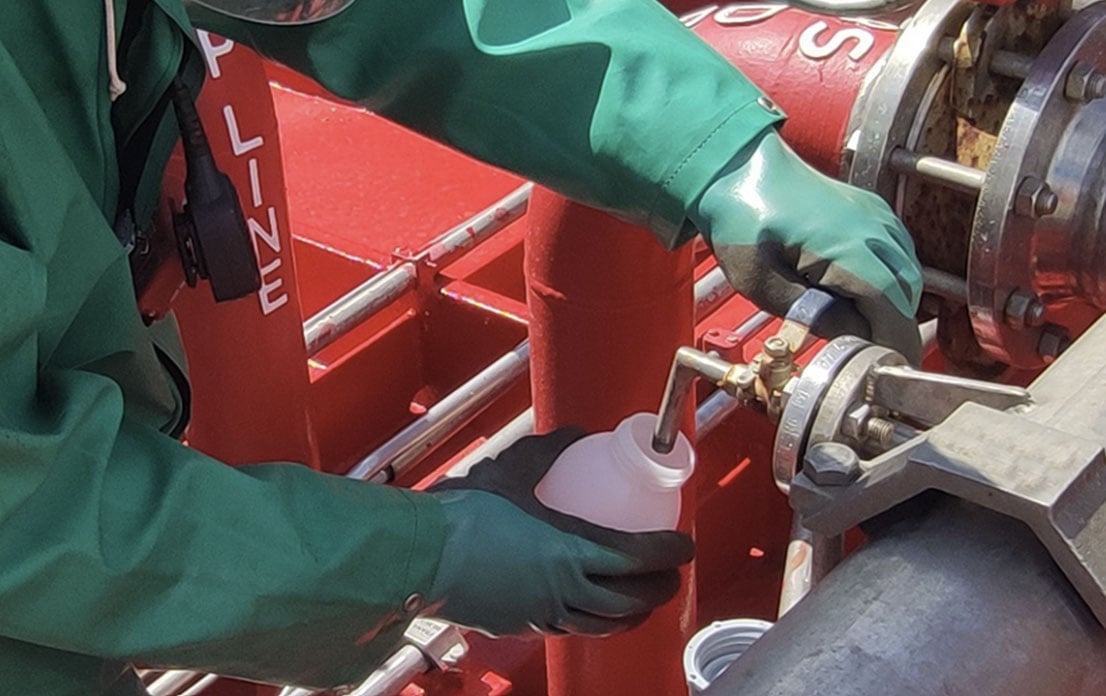
BRITANNIA LOSS PREVENTION JUNE 2025 GIVEN THAT EVEN TRACE CONTAMINANTS CAN RESULT IN CARGO BEING DECLARED OFF-SPECIFICATION, THE IMPORTANCE OF PROPER SAMPLING CANNOT BE OVERSTATED. Its effectiveness, however, is fundamentally influenced not only by the method but also by the timing and location of sample collection. Each designated sampling point – whether at the shore tank, shoreline, ship’s manifold, or cargo tank – serves a specific evidentiary function and must be understood in context. Where sampling practices are inconsistent or improperly executed, the risk of misinterpreting cargo quality and misattributing contamination increases. In many cases, even when contamination originates ashore, it is still typically the ship that bears the burden of proof to establish that it is not responsible for the quality discrepancies. Through various scenarios and real-world examples, we will demonstrate how robust sampling practices contribute to safeguarding the ship’s interests and supporting fair, credible cargo quality assessments. A good understanding of these principles can help reduce risks and ensure clear evidence is available in the event of a cargo quality dispute. LIQUID CARGO - HOW TIME AND PLACE OF SAMPLING CAN MAKE A DIFFERENCE 2 | BRITANNIA LOSS PREVENTION | GUIDANCE As illustrated above, while both points are widely considered sampling points, they are designed to serve different purposes: the sampling point at the shoreline is generally used to verify line fullness during packing, whereas the one at the ship’s manifold is intended to capture sediments and water, which typically settle at the bottom of piping. SUITABILITY OF SAMPLING POINT SHIP’S MANIFOLD SHORELINE REAL-WORLD PERSPECTIVES Contaminants that might have originated from shorelines or shore tanks (including rust, suspended matter, or residues from previous cargoes) may be wrongly attributed to the ship if not successfully captured during sampling. Though not exhaustive, the following may help visualise and better understand the significance of various points, stages and timings of sampling. SAME TIME, DIFFERENT POINTS These two samples were taken at the same time after a settling period – following the stop of the shore loading pump and with residual pressure still in the line system – and showed significant differences upon visual inspection. Consider a scenario where a ship and a shore terminal dispute the cargo. If the shore terminal relies solely on its visual inspection of the cargo at the shoreline (which may not be representative of the cargo) and dismisses any discrepancies observed by the crew, this can put the ship at a disadvantage. The ship may struggle to prove its case without obtaining samples directly from the manifold. SHIP’S MANIFOLD SHORELINE 3 | BRITANNIA LOSS PREVENTION | GUIDANCE Here, we have two samples taken: one at the initial loading or “first flow” and another after ten minutes of flushing at the manifold. If the ship’s manifold was inspected to be clean and acceptable before the hose or loading arm is connected, then it is evident that there are residues (previous cargo/contaminants) coming from the shoreline. In this particular case, the surveyors’ initial sampling at the shoreline confirmed this issue and recommended keeping the manifold valve shut while flushing continued. At first glance, one might assume that a small quantity or slight discoloration from previous cargo would not significantly impact the overall quality of the inten
Liquid Cargo How time and place of sampling can make a difference
Britannia P&I
Read full article at Britannia P&I →
Opens Britannia P&I in a new tab