news Safety & casualtyOperational risk Marine Insight
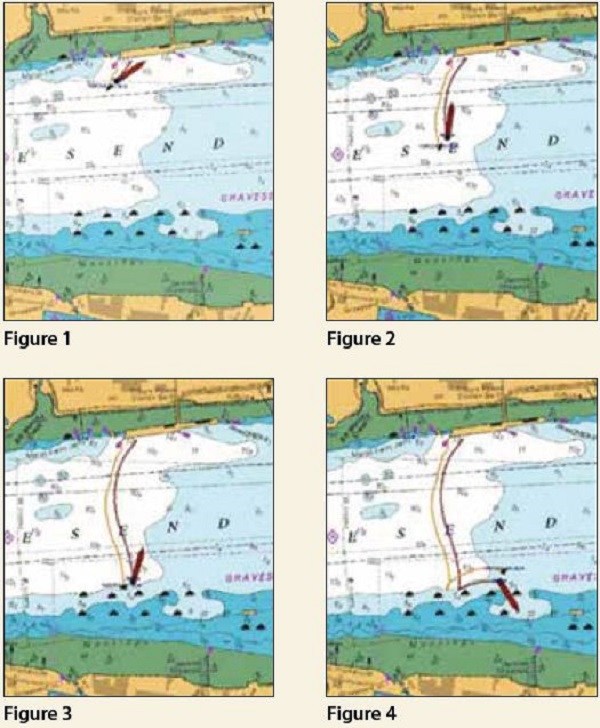
A RoRo passenger vessel was underway in coastal waters. An OOW and a crew member acting as lookouts were on the bridge continuously. The vessel’s route and position were displayed on the ECDIS, and the helm was on autopilot. The weather during the voyage was relatively calm, but with increasing fog and rain during the night. At 02:00, there was a change of watch. The routine was that each officer did a 12-hour watch, so 12 on, 12 off. At the time of the handover, the vessel had started a slow turn to port to follow the planned route. Several alarms were sounding, warning of a fault in the GPS receiver. This caused the navigation equipment to lose its positioning signal. Although the GPS was lost, the ECDIS and one of the radar units continued to estimate the vessel’s position using dead reckoning (DR). The officer being relieved was aware that the GPS receiver had, at that time, lost its positioning signal, but noticed that the other GPS receiver was operational. He had experienced similar problems previously, and assumed that the relieving officer was also aware of the cause of the alarm and what actions to take to restore the GPS receiver if the positioning signal was not restored automatically. However, he did not confirm this with the relieving officer before leaving the bridge. Over a ten-minute period, the alarm signals were repeated on several of the navigation systems but after acknowledgement were silent. No further action was taken. As the vessel came onto a course of 010°, the vessel’s true drift of two to three degrees to port of the course was not showing. Instead, the ECDIS showed that the vessel was sailing with a drift of two degrees to starboard, as it was on DR mode. This meant that the vessel was gradually moving to the west of the planned route. The deviation between the planned route and the actual route is shown on the chart overleaf. The OOW was oblivious of this variation because his attention was exclusively on the ECDIS display. At 05:13 the vessel passed on the wrong side of an eastern cardinal mark that marks a shoal. The first grounding took place at this time. As the vessel passed over the shallow area, its speed decreased from 17 knots to 9 knots and there were strong vibrations, which continued for around 20 seconds. The chief officer, now on the bridge, observed that the X-band radar was missing a GPS signal and the OOW responded that this issue had persisted since the watch change. Once the vessel had passed the shoal and entered deeper water, speed increased again to 17 knots. The crew made no adjustments to the engine controls during the grounding because they did not realise they were off track and had touched bottom. The Master, having felt the vibrations, came to the bridge. When he arrived, the vibrations had stopped; the OOW was unperturbed and the Master’s initial concerns were assuaged. The Master asked the bridge crew what had happened, but he did not receive an explanation for the vibrations. He checked the vessel’s position on the ECDIS, which showed that the vessel was following the planned route. The S-band radar also showed the DR calculated position, albeit with the position indicated in a different colour and the note ‘Dead Reckoned’. However, the radar image itself was not affected by the error. At this point, the Master took over responsibility for the navigation and preparations for arrival began. The crew members on the bridge discussed whether the vessel had run over something, or
Real Life Incident: One Grounding Not Enough to Warrant Attention

Marine Insight
Read full article at Marine Insight →
Opens Marine Insight in a new tab