news Operational riskSafety & casualty Marine Insight
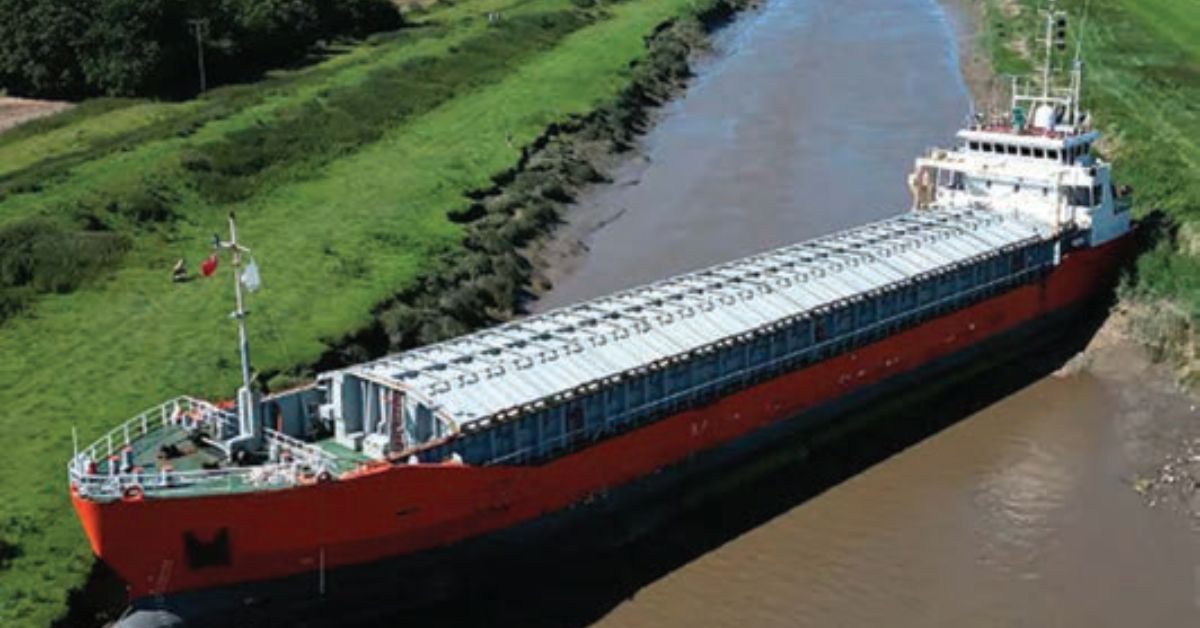
A small cargo vessel was loaded and proceeding in a restricted waterway – a river with significant tidal range. The destination port allowed for vessels to a maximum of 83m LOA and 13m beam; the vessel in this case was 80m in length with a beam of 12m. Two pilots had boarded at the sea buoy before entering the river. The Master and the two pilots completed a brief Master/pilot exchange before pilot A, who was under assessment by the senior pilot (pilot B), took the helm. The Master and pilot B remained on the bridge but, aside from monitoring the passage, did not have specific roles within the bridge team. After passing the swing bridge, pilot A began to reduce the vessel’s speed in preparation for the berthing manoeuvre. Noticing that the vessel was slightly to port of the planned track, he applied 30 degrees of starboard helm and ‘kicked’ the main engine ahead to correct the vessel’s position in the narrow channel. The vessel’s bow quickly swung to starboard. Within a minute, before the bridge team could take effective avoiding action, the vessel’s bows grounded on the western bank of the river at a speed over ground (SOG) of 6 knots. The vessel’s stern was then pushed onto the eastern bank by the flood tide, effectively wedging the vessel across the river. Initial attempts to free the vessel were unsuccessful, but the ship was later refloated with tug assistance on the evening flood tide. The preliminary investigation identified that: The vessel had probably experienced some bank effect. The pilot’s attempt to counter with strong starboard helm and a kick ahead on the main engine was, in hindsight, an over-correction. At the time of the over-correction, the pilot had been at the con and helm within the confines of a very restricted waterway for nearly two hours. Having to sustain such a high level of attention for such a long duration probably resulted in a lapse of concentration on the pilot’s part. Lessons learned Bank effect is a pernicious but well documented hazard. While reducing speed is an excellent precautionary action to reduce bank effect, in this case the strong helm application and engine ‘kick’ was probably too much. The destination port authority has started simulator training for its pilots and has instituted a review of vessel suitability for transits to and from the port. Additionally, a risk assessment for vessel groundings was completed, including consideration of the benefits of requiring an escort tug. Disclaimer : The information on this website is for general purposes only. While efforts are made to ensure accuracy, we make no warranties of any kind regarding completeness, reliability, or suitability. Any reliance you place on such information is at your own risk. We are not liable for any loss or damage arising from the use of this website. Related Posts Real Life Incident: Collision Of Container Ship and General Cargo Ship Leads To Sinking And Fatalities Real Life Incident: Collision and Sinking of Small Craft in Shipping Lane Real Life Incident: Crew Saved but Ship Lost Real Life Incident: Pin Holes Create Pathway To Fatal Reckoning Related Posts Real Life Incident: Collision Of Container Ship and General Cargo Ship Leads To Sinking And Fatalities Real Life Incident: Collision and Sinking of Small Craft in Shipping Lane Real Life Incident: Crew Saved but Ship Lost Disclaimer : The information on this website is for general purposes only. While efforts are made to ensure accuracy, we make no warranties of an
Real Life Incident: Restricted Waterway Bank Effect
Marine Insight
Read full article at Marine Insight →
Opens Marine Insight in a new tab