news Offshore Operational risk Marine Insight
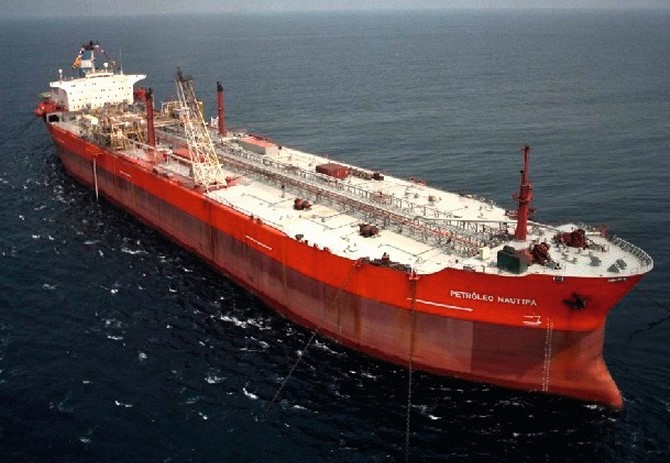
Floating Production Storage and Offloading (FPSO) Vessels are invaluable for the offshore oil and gas industry, given their many advantages over traditional offshore oil platforms. FPSOs are positioned close to an offshore oil field. Using FPSOs over pipelines means that the FPSO Vessel can be moved to another place when an oil field has been exhausted. FPSOs are built to withstand the harshest conditions and the deepest waters. They can also continually operate for around 20 years and more, proving cost-effective. Fluids are collected from subsea reservoirs via pipes and then separated into natural gas, crude oil, water, and impurities in the production facilities located on the FPSOs. Crude oil is kept in tanks and loaded into shuttle tankers for distribution or additional refining. There is an increased demand for new and converted FPSOs, mainly due to the decreasing rate of new onshore oil discoveries and technological improvements that have enabled deepwater oil exploration in unprecedented depths. FPSOs prove helpful in offshore oil regions that lack a pipeline infrastructure. They are vital in remote areas where building a pipeline network may not be possible due to costs or other reasons. Today, more than 270 vessels are deployed as oil FPSOs globally. However, in this article, we will look at the 10 Biggest FPSOs, ranked on the basis of their storage capacity. 1. Egina FPSO TotalEnergies Egina FPSO is the world’s biggest floating production, storage, and offloading vessel by capacity. It is situated in the Egina oil field, around 130 km off the Nigerian Coast, at a depth of over 1500 m. It is said to be Total’s most ambitious ultra-deep offshore project, which also aims to boost Nigeria’s industrial development and increase its oil production. The Egina Oil Field was discovered in 2003 and covers an area of approximately 500 square miles. It lies 200 km offshore from Harcourt Port at water depths between 1400 and 1700 m. According to estimates, the field has 550 million barrels of oil. Approval for developing it was given in 2016, and TotalEnergies started production from the Egina FPSO in 2018. TotalEnergies operates it and has a 24% stake in partnership with CNOOC, NNPC, Sapetro and Petrobras. Image Credits: TotalEnergie Egina FPSO has a 100-m flare boom and an oil offloading terminal. It is designed to hold 2.3 million barrels of oil and connects to 44 subsea wells at a depth of 1600 m, producing 208,000 barrels of oil every day. It is also linked to a subsea production system that includes risers, 52 km of oil and water injection flowlines, 20 km of gas pipelines, 12 jumpers, and 80 km of subsea manifolds. The FPSO weighs around 220,000 metric tonnes and is 330 m long and 60 m broad, making it TotalEnergies’ biggest-ever FPSO. Egina’s topside modules have a gross dry weight of 47,500 tonnes and comfortably accommodate 200 working professionals. Egina FPSO was built by Samsung Heavy Industries and local contractors in a specially constructed shipyard in Nigeria. Six of the 18 modules were constructed in Africa and integrated locally, the first time such a complicated project was assembled in Africa. TotalEnergies is continuously innovating Egina FPSO to meet the project’s challenges. For instance, the Vclay subsea production system provides more detailed data and a more accurate understanding of the reservoir and the positions of the wells. Also, this project has enhanced Nigeria’s infrastructure. A 500 m long dock was built
10 Biggest FPSOs in the World
Marine Insight
Read full article at Marine Insight →
Opens Marine Insight in a new tab