news Markets & tradeOperational risk Splash247
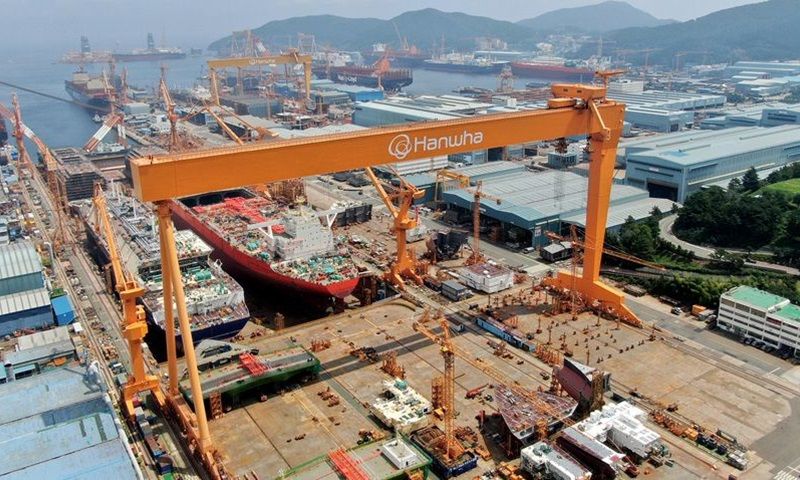
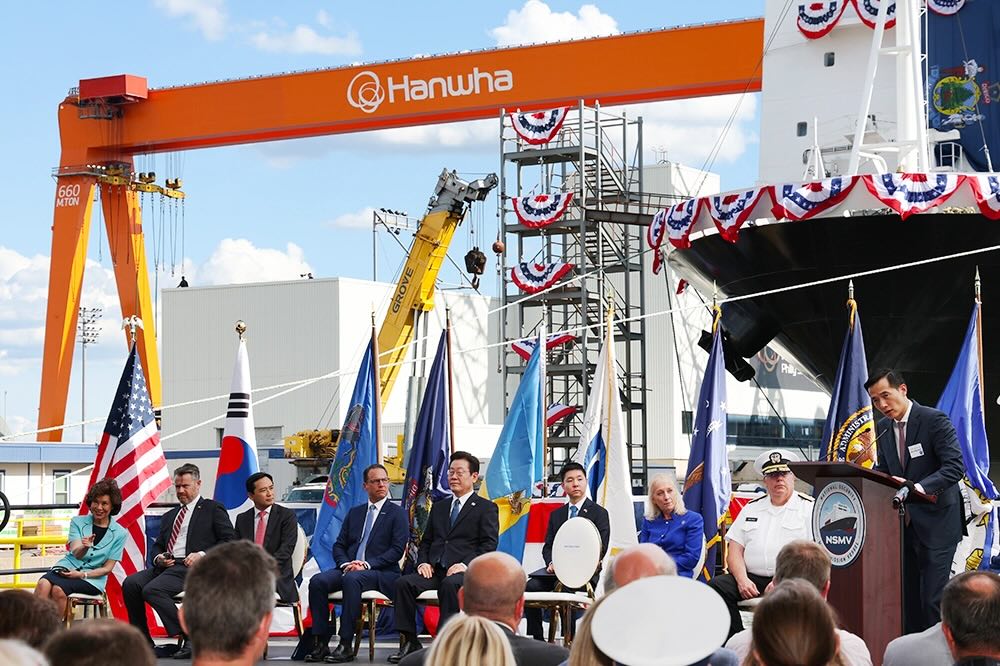
The United States holds less than 1% of global commercial shipbuilding market share and ranks on a par with Vietnam in a rigorous ten-criteria assessment of shipbuilding competitiveness – a sobering verdict from broker BRS Group that exposes the enormous structural gap between Washington’s maritime ambitions and industrial reality. In its shipping markets annual review published this week, BRS evaluated seven major shipbuilding nations and regions across criteria including labour, capital, supply chains, design capability, pricing and the ability to absorb losses. China leads comprehensively with a near-perfect score of 96 out of 100, followed by South Korea at 90, Japan at 80 and Europe at 76. India scores 56. The US and Vietnam each score just 46. The chasm between American and Chinese shipbuilding is fundamentally a gap in industrial infrastructure The numbers reflect structural realities that political will alone cannot quickly overcome. US newbuilding prices are currently three to five times those achievable in China, Korea, Japan or even Europe, according to BRS. When brokers approach US yards for price indications, they routinely find no designs readily available, with quotations subject to inflation indices and equipment supplier confirmation, and delivery timelines stretching years beyond contract signing. The labour problem is particularly acute. US immigration tightening reduces access to the kind of abundant, lower-cost workforce that underpins competitive shipbuilding, while building a skilled domestic base of subcontractors, designers and engineers from near scratch is assessed to take between ten and twenty years – based on the trajectories observed in Japan, Korea and China. Large Asian shipbuilders employ hundreds of engineers. US yards have no equivalent depth. The supply chain deficit compounds this. A short, domestic supply chain is essential for cost control, quality and schedule reliability – and developing one is entirely dependent on sustained, diversified shipbuilding volumes over many years. The chicken-and-egg problem is real. BRS is also pointed on the Jones Act, the century-old legislation requiring vessels moving goods between US ports to be American-built, owned, flagged and crewed. “The Jones Act has restricted competition in American shipping,” the broker notes, quoting Republican congressman Tom McClintock: “It enriches a very small special interest at the expense of every consumer in America.” Despite being conceived to protect and foster a domestic industry, the act has produced neither a major US shipowner nor a major US shipbuilder. The broker is careful to note that China bears no responsibility for the US decline, and is sceptical that the now-suspended US Trade Representative port fees on Chinese-built tonnage would have achieved their stated aims. The US, it observes, “morphed long ago from an industrial country into a service-based nation.” That said, BRS does not dismiss American prospects entirely. The Trump administration’s National Security Strategy explicitly targets reindustrialisation and supply chain sovereignty, and the broker draws a direct parallel with Washington’s campaign to bring advanced semiconductor manufacturing onshore from Taiwan. The same economic leverage applied to Korean and Japanese shipbuilders – both heavily dependent on US market access – could accelerate domestic capability transfer in ways that override conventional economics. BRS also flags the longer-term potent
BRS exposes the scale of the challenge facing Trump’s maritime ambitions
Splash247
Read full article at Splash247 →
Opens Splash247 in a new tab