news Decarbonization & energyCompliance & regulation Marine Insight
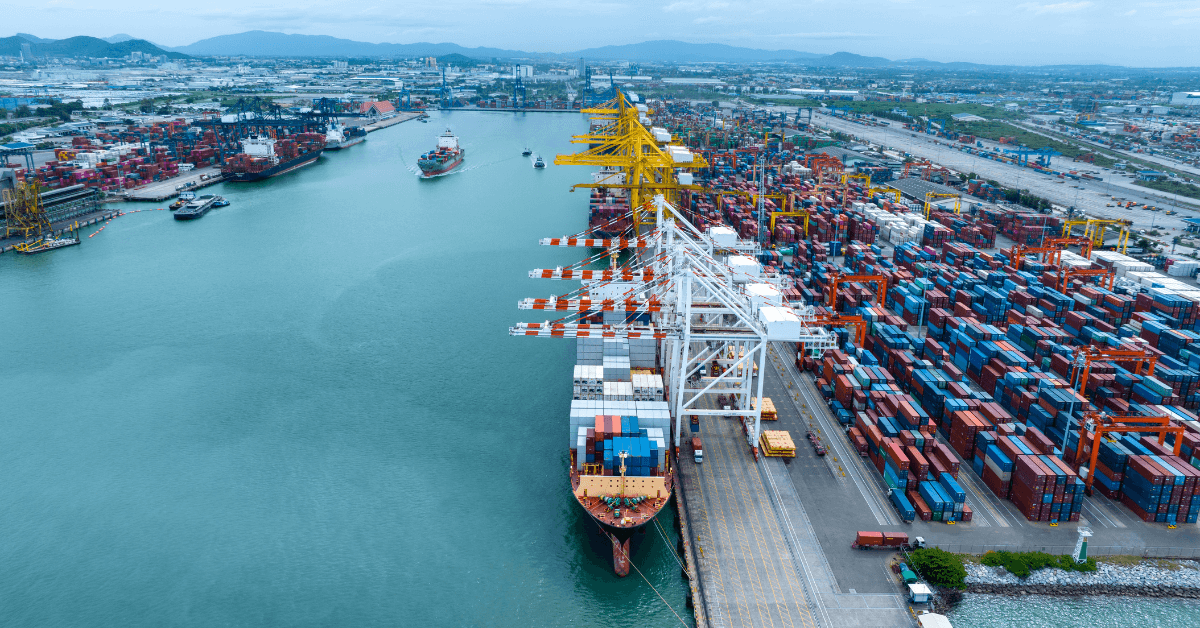
While the maritime industry has, in the past few years, been the subject of intense scrutiny for its GHG emissions, most of the regulatory focus has been on the shipping sector. While this is not unusual given that it is the maritime transport leg of the supply chain that accounts for the bulk of emissions (primarily through its bunker consumption), there are other stakeholders that also contribute to emissions (albeit not of the same magnitude as shipping). This set of stakeholders includes Maritime Ports and Terminal operators, who act as the link between sea and land transport, facilitating EXIM movement by functioning as gateways for vessels to berth at and discharge cargo. Ports and terminals are capital-intensive assets, requiring significant investments for the acquisition of land, development of facilities, and purchasing of container handling equipment, all of which entail extensive construction activity. Once constructed and operational, regular container/ cargo handling activity at the port and various ancillary activities also generate emissions. These ongoing operational activities include the use of cranes and vehicles for moving cargo/ containers within the port premises, fuel consumed by cranes of various types, reach stackers, trucks, and other vehicles, administrative activities, etc., all of which are critical to the smooth functioning of the port. Thus, the construction and operations of ports and terminals give rise to emissions right from the onset, attributable to the various activities that fall under the port’s scope. Besides this, the port is considered to be indirectly responsible for emissions emanating from the activities of other entities operating from or using their premises and facilities. Therefore, while designing and constructing the port and terminals therein, it is advisable to bear in mind the UN’s Sustainable Development Goals (SDGs), an internationally agreed-upon set of goals ratified in 2015 as part of the United Nations 2030 Agenda for Sustainable Development. Whether setting up a greenfield port, evaluating a port expansion project, or setting daily operational processes, it is essential to consider the impact on the SDGs. To illustrate this point with specific examples, when conducting feasibility studies for a greenfield port, it is crucial to gauge the impact on the ecology and local society in the region. Likewise, if the port doesn’t have a natural deep draught, dredging will have to be undertaken at frequent intervals, which will also impact the environment. Once commissioned, the port can generate significant amounts of waste, which will have to be disposed of responsibly, for which appropriate arrangements will need to be made while designing and constructing the port. As with all other industries, emissions from ports are categorised into: 1) Scope 1: emissions directly emanating from the port’s operations 2) Scope 2: the port’s indirect emissions from power generation 3) Scope 3: Other indirect emissions Given their unique position at the intersection of the sea and land legs, ports can not only regulate their own emissions but also help other stakeholders such as Carriers and Truckers in reducing their emissions. There are certain measures that port authorities and terminal operators can undertake to reduce direct and indirect emissions, which are explained below: 1. Minimising or optimising energy consumption Since port activities involve the consumption of extensive amounts of en
How Port and Terminal Operators Can Control Emissions?
Marine Insight
Read full article at Marine Insight →
Opens Marine Insight in a new tab
