pi_circular TankerLNG / LPG Operational risk West of England
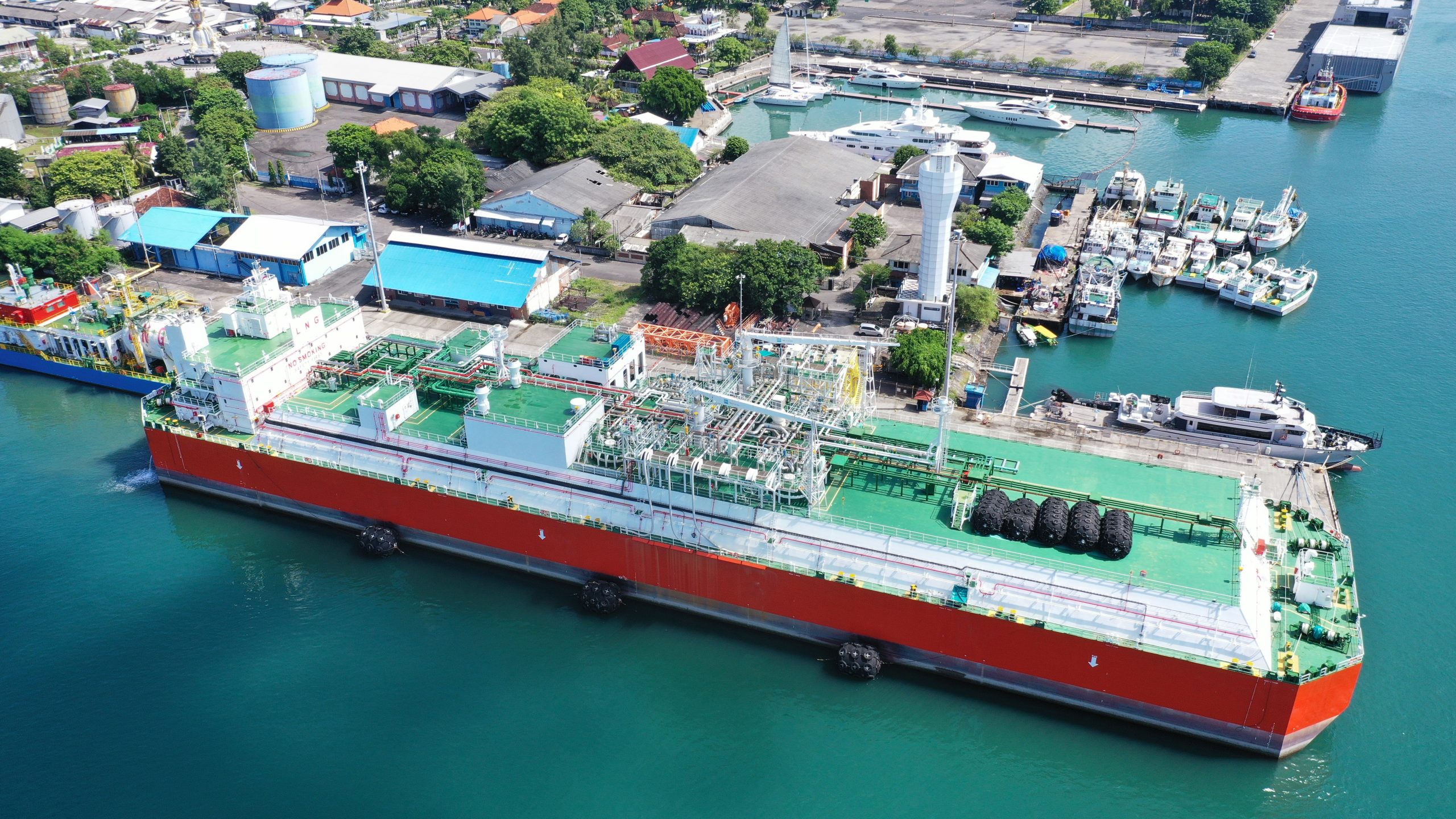
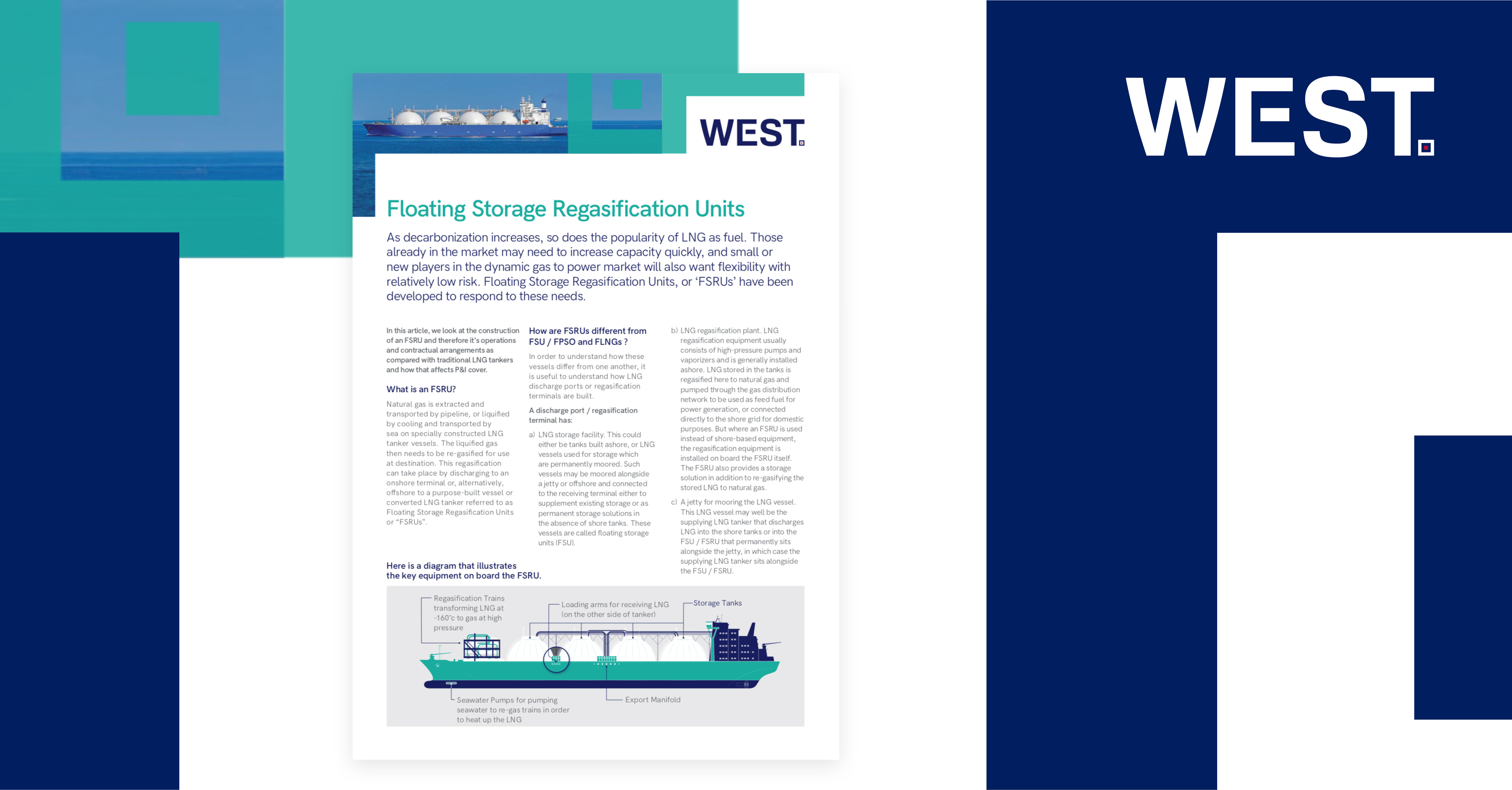
Floating Storage Regasification Units In this article, we look at the construction of an FSRU and therefore it’s operations and contractual arrangements as compared with traditional LNG tankers and how that affects P&I cover. What is an FSRU? Natural gas is extracted and transported by pipeline, or liquified by cooling and transported by sea on specially constructed LNG tanker vessels. The liquified gas then needs to be re-gasified for use at destination. This regasification can take place by discharging to an onshore terminal or, alternatively, offshore to a purpose-built vessel or converted LNG tanker referred to as Floating Storage Regasification Units or “FSRUs”. How are FSRUs different from FSU / FPSO and FLNGs ? In order to understand how these vessels differ from one another, it is useful to understand how LNG discharge ports or regasification terminals are built. A discharge port / regasification terminal has: a) LNG storage facility. This could either be tanks built ashore, or LNG vessels used for storage which are permanently moored. Such vessels may be moored alongside a jetty or offshore and connected to the receiving terminal either to supplement existing storage or as permanent storage solutions in the absence of shore tanks. These vessels are called floating storage units (FSU). b) LNG regasification plant. LNG regasification equipment usually consists of high-pressure pumps and vaporizers and is generally installed ashore. LNG stored in the tanks is regasified here to natural gas and pumped through the gas distribution network to be used as feed fuel for power generation, or connected directly to the shore grid for domestic purposes. But where an FSRU is used instead of shore-based equipment, the regasification equipment is installed on board the FSRU itself. The FSRU also provides a storage solution in addition to re-gasifying the stored LNG to natural gas. c) A jetty for mooring the LNG vessel. This LNG vessel may well be the supplying LNG tanker that discharges LNG into the shore tanks or into the FSU / FSRU that permanently sits alongside the jetty, in which case the supplying LNG tanker sits alongside the FSU / FSRU. As decarbonization increases, so does the popularity of LNG as fuel. Those already in the market may need to increase capacity quickly, and small or new players in the dynamic gas to power market will also want flexibility with relatively low risk. Floating Storage Regasification Units, or ‘FSRUs’ have been developed to respond to these needs. Here is a diagram that illustrates the key equipment on board the FSRU. Export Manifold Loading arms for receiving LNG (on the other side of tanker) Seawater Pumps for pumping seawater to re-gas trains in order to heat up the LNG Regasification Trains transforming LNG at -16 0 ̊c to gas at high pressure Storage Tanks A Floating Liquefaction Natural Gas (FLNG) on the other hand is for use at the other end of the LNG shipment chain and is stationed offshore at a loading port in lieu of a liquefaction plant / loading terminal ashore. It operates in a similar manner to FSRU’s with the exception that the FLNG has a production unit installed onboard which treats the raw natural gas to separate methane from other gases and impurities before liquefying the natural gas to LNG. In the above LNG value chain, the FLNG replaces the need for gas processing, liquefaction, storage and loading terminal at the load port whereas the FSRU negates the need for a receiving tank and reg
Floating Storage Regasification Units
West of England
Read full article at West of England →
Opens West of England in a new tab