news Operational riskMarkets & trade Marine Insight
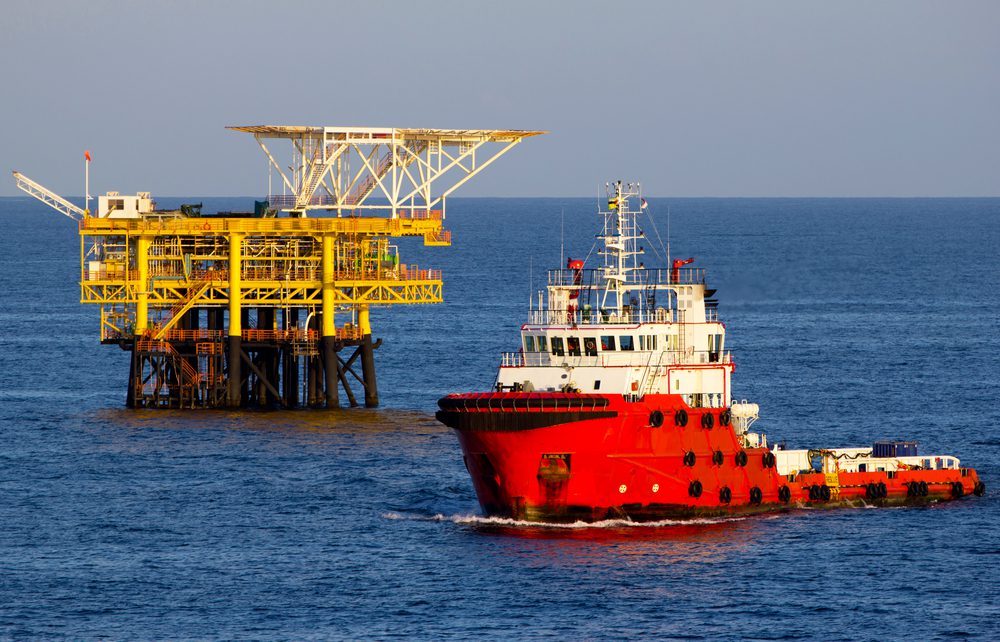
The Petronius Compliant Tower in the Gulf of Mexico holds the title of the tallest maritime oil rig ever deployed. It stands at a height of 640 m or 2100 ft from the seabed to its tip and was the tallest freestanding structure in the world until it was surpassed by Dubai’s Burj Khalifa in 2010. Image for representation purpose only It was designed to flex and sway in deepwater conditions and extracts 60,000 barrels of oil and 100 million cubic feet of gas daily. The tower is located in Viosca Knoll Block 786, at a water depth of 535 m and was originally developed by Texaco and Marathon Oil. The Chevron Corporation currently operates it. What is a Compliant Tower? While the more common fixed platforms remain in place, compliant towers sway or move with ocean currents, winds and waves. This flexibility is needed in deep waters with powerful currents or winds, as rigid structures might not be able to withstand these conditions. Compliant towers have a narrow and flexible tower with a pile foundation on the seafloor, making it ideal for water depths between 400 to 1000 m. The Petronius Tower is the perfect example. It was assembled in sections and then floated out to sea, where it was installed using specialised equipment. Construction of the Tallest Maritime Oil Rig The jacket or the steel tower was built by J. Ray McDermott in Morgan City, Louisiana, per the $140 million contract. It was assembled in two main pieces, the bottom section with flexpiles acting as shock absorbers and the top section, tapering to the surface level. Image for representation purpose only The deck modules or topsides were built by Gulf Island Fabrication in Houma, Louisiana, as two blocks. The North Module with power, well bay, turbine generators, etc, was installed in 1998. The 3600 tonne South Module had production equipment, crew accommodation space, and water flood systems. It was lost overboard, so another one was built and installed in 2000; however, this led to a loss of millions of dollars and delays in the project. The total cost of construction was more than 500 million dollars. Assembly of the Tallest Offshore Oil Rig The jacket bottom was launched from the Intermac 650 barge. It self-righted and was lowered onto the seabed piles with the help of underwater winching systems. The top section was lifted by the DB-50 barge’s crane and mated to the bottom section. The North Module was lifted by the DB-50 in 1998, and the South replacement was installed by Saipem S7000, a derrick barge with twin 7700-tonne cranes, in April 2000, marking the full assembly of the platform. Even though the project suffered from a few setbacks initially, it became a cornerstone of deepwater oil production in the Gulf of Mexico region and a case study in offshore engineering resilience. Operations The Petronius Tower taps into the Petronius Oil Field, which is around 210 km southeast of New Orleans, Louisiana. Due to its high rates of production, it has played a major role in boosting domestic oil production for the United States. The platform has drilling risers, production risers, which are connected to the subsea wellheads. Its topsides weigh around 43,000 tonnes and have living quarters, galley, mess hall, medical facilities, safety stations, helipad, cranes, etc. It also has HVAC, emergency power, waste management systems, potable water systems, etc. The platform can house 60 to 70 personnel per shift rotation. Image for representation purpose only Safety Measures & Risk Mi
Tallest Maritime Oil Rig Ever Deployed

Marine Insight
Read full article at Marine Insight →
Opens Marine Insight in a new tab