news Decarbonization & energy Hellenic Shipping News
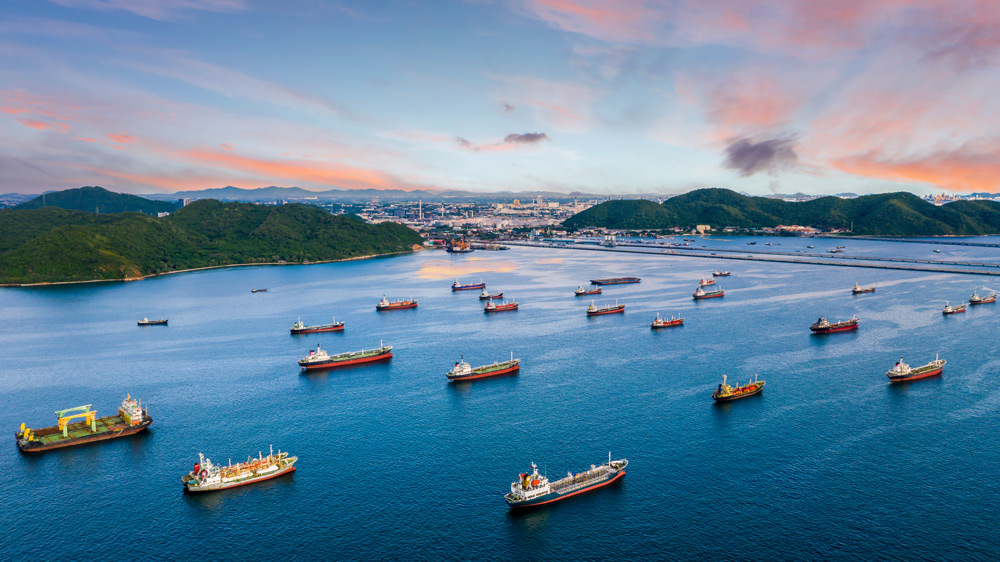
Blue Horizons: supporting the decarbonisation of maritime transport in International Shipping News,Shipping: Emission Possible 26/02/2026 With over 80% of world trade carried by sea, the shipping industry is a cornerstone of the global economy. Classified as one of the “hard-to-abate sectors”, the industry is now facing a fundamental challenge: how to transform a model that relies almost exclusively on fossil fuel-powered engines, while maintaining the fluidity of global trade? Here’s an overview of innovative technologies, new financing models and BNP Paribas’ support in the energy transition of maritime industry players. Why is Maritime Transport Sector Considered Hard-to-Abate? As the OECD points out, hard-to-abate sectors are those that “face particular challenges in their low-carbon transition. This can be either due to an absence of low-carbon alternatives or due to currently high costs of fully transitioning to low-carbon technologies and energy sources”. For the maritime transport sector, this classification is explained by three major factors: the absence of mature technological solutions, heavy reliance on fossil fuels, and the scale of the operational constraints associated with long-distance transport. Commercial ships require extremely high power to operate the high seas, over long distances and under severe weather conditions. In April 2025, the International Maritime Organization (IMO) adopted a roadmap aimed at achieving net-zero greenhouse gas emissions from maritime transport by 2050. The maritime decarbonisation action plan includes interim targets of a 20% reduction by 2030 and a 70% reduction by 2040, compared with 2008 levels. It also provides for the introduction of marine fuel standards and a global greenhouse gas pricing mechanism designed to incentivise shipowners to transition to cleaner fuels. However, divergence in position among certain IMO member states during negotiations led to a one-year delay in the formal adoption of the plan (initially scheduled for October 2025, with entry into force now expected from 2028 onwards). ‘’The necessary transformation of the maritime industry is therefore not without challenges. As Bertrand Dehouck, Global Head of Transportation Capital Markets at BNP Paribas CIB, explains: “The decarbonisation trajectory of the shipping industry depends on exogenous factors, such as the availability of low-carbon fuels or vessel sailing speeds. Add geopolitical disruptions on one hand and evolving IMO regulations on the other, and the result is a highly complex landscape.” Portrait de Bertrand Dehouck. Bertrand Dehouck, Global Head of Transportation Capital Markets at BNP Paribas CIB Support the Decarbonisation of the Shipping Portfolio Despite the current context, which is putting pressure on the sector’s climate trajectories, the Group continues to support the decarbonisation of maritime transport and has set clear targets for its own portfolio,” continues Bertrand Dehouck. Since 2019, BNP Paribas has been a signatory to the Poseidon Principles(Opens in a new tab) – the leading international framework for climate alignment in shipping. In this context, the Group aims to reduce the carbon intensity of its shipping portfolio by 23% to 32% by 2030 compared with 2022 levels. To measure its emissions, the Group applies a harmonised carbon-intensity metric across its entire portfolio, expressed in grams of CO₂ equivalent per tonne of deadweight (a vessel’s maximum carrying capacity) multipl
Blue Horizons: supporting the decarbonisation of maritime transport
Hellenic Shipping News
Read full article at Hellenic Shipping News →
Opens Hellenic Shipping News in a new tab