news Cruise Decarbonization & energyOperational risk Bureau Veritas
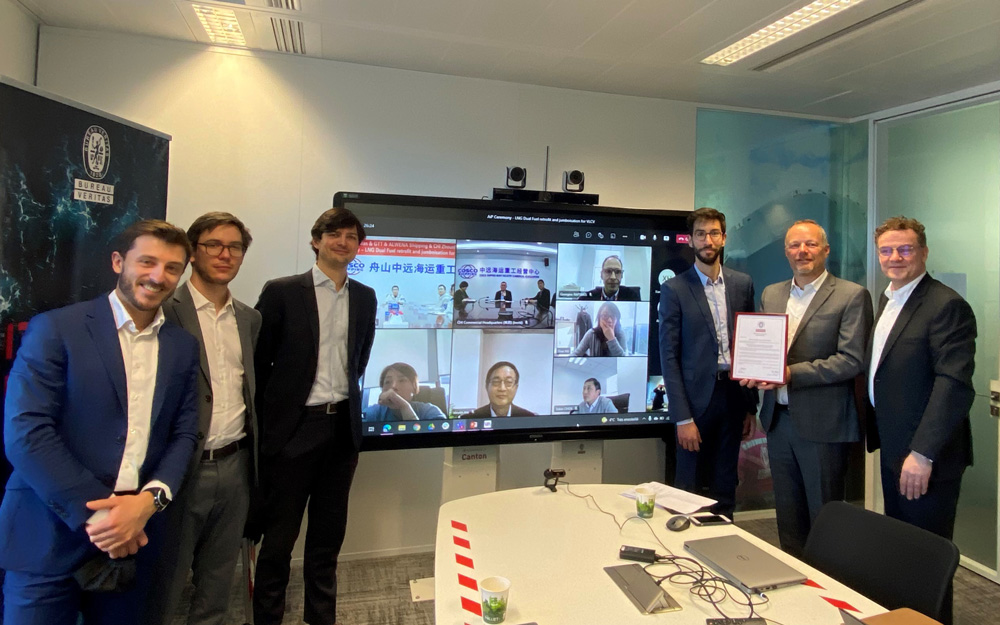
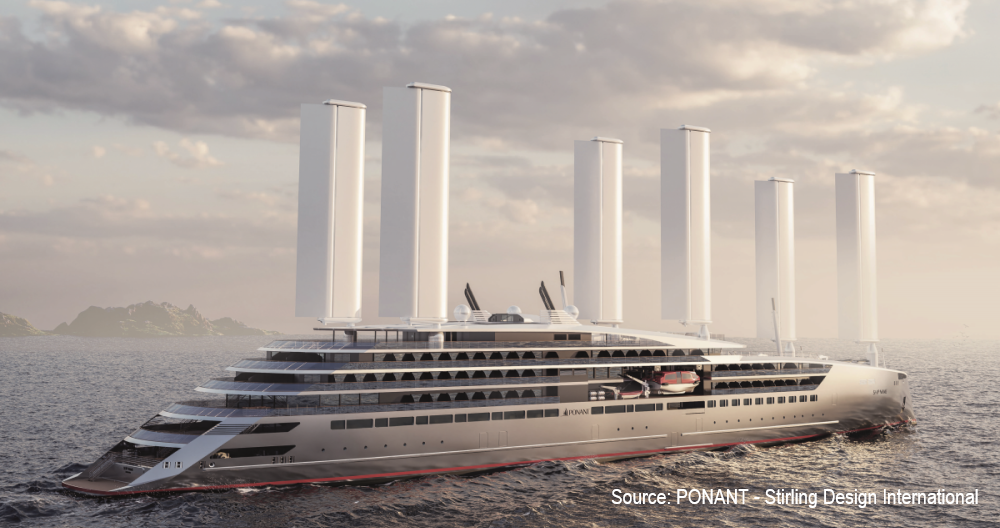
Bureau Veritas Grants AiP for PONANT’s Low-Carbon, Wind-Assisted Passenger Vessel Design Home News Bureau Veritas Grants AiP for PONANT’s Low-Carbon, Wind-Assisted Passenger Vessel Design Sep. 17 2024 LinkedIn Twitter Facebook share Advancing sustainable maritime travel with a focus on zero emissions and innovative energy solutions Bureau Veritas has granted Approval in Principle (AiP) to PONANT, a world leader in cruising, forits new twin-screw sailing passenger vessel concept, Swap2Zero. This project represents a significant advancement in sustainable maritime travel, featuring a design that emphasizes low carbon emission technologies and wind-assisted propulsion. Image Andreas Ullrich, Global Market Leader - Passenger Ships & Ferries at Bureau Veritas Marine & Offshore (Left) presents AiP to Mathieu Petiteau, Newbuilding and R&D Director at PONANT The vessel concept, measuring 186.2 meters in length, is designed for transoceanic voyages and is equipped with a combination of renewable energy sources, including wind, solar, and low-carbon fuels. Its design aligns with its goal of being close to zero-emission ready by focusing on three core principles: energy efficiency, energy sobriety, and the optimized use of renewable resources. Wind propulsion is the primary method, supplemented by solar power, hydrogen fuel cells, and renewable fuels such as bio and e-methane.Key features of the Swap2Zero project include the ability to achieve up to 50% wind-assisted propulsion and provide up to one month of operational autonomy. It can operate for 15 days without wind at a speed of 10 knots, or up to 30 days with 50% wind assistance. The vessel concept also incorporates approximately 1,000 square meters of solar panels, Proton Exchange Membrane (PEM) and Solid Oxide Fuel Cells (SOFC), batteries, and renewable liquid hydrogen. Additionally, dual-fuel engines certified for biodiesel and biogas support Safety of Return to Port (SRtP) compliance.A notable aspect of the vessel concept is its advanced carbon capture system, designed to capture and store CO2 emissions, which may be reused or securely stored. The vessel concept also features systems for waste heat and cold recovery, contributing to its overall sustainability.The Approval in Principle for the Swap2Zero project has been granted in accordance with key international conventions including SOLAS, ILLC, MARPOL, and the IGF Code. It also aligns with Bureau Veritas standards such as the Rules for the Classification of Steel Ships (NR 467), Wind Propulsion Systems (NR 206), and Hydrogen-Fueled Ships (NR 678).Mathieu Petiteau, Newbuilding and R&D Director at PONANT, said: “This vessel concept represents our vision for the next generation of cruise vessels, showcasing how various technologies, energy sources, and processes can be harmonized to provide optimal autonomy and flexibility, all while being compliant with existing regulations. It is a realistic and profitable approach that achieves the highest level of decarbonization. This project also offers a valuable opportunity to deepen our expertise in innovative technologies, while engaging regulatory and certification bodies, equipment manufacturers, design offices, and shipyards in a collaborative real-world case study, exploring multiple decarbonization strategies we believe in.” Image Andreas Ullrich Global Market Leader - Passenger Ships & Ferries Bureau Veritas Marine & Offshore “The Swap2Zero concept exemplifies a significant advancement in
Bureau Veritas Grants AiP for PONANT’s Low-Carbon, Wind-Assisted Passenger Vessel Design
Bureau Veritas
Read full article at Bureau Veritas →
Opens Bureau Veritas in a new tab