news Operational riskCargo risk Manifold Times
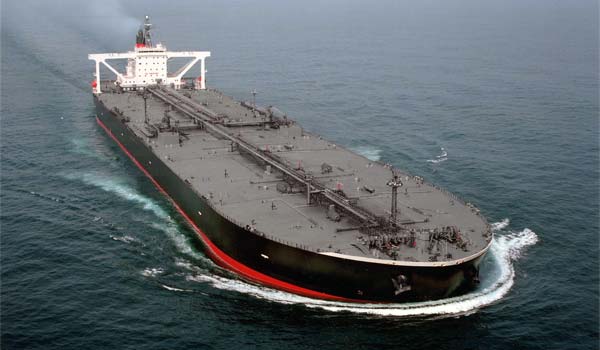
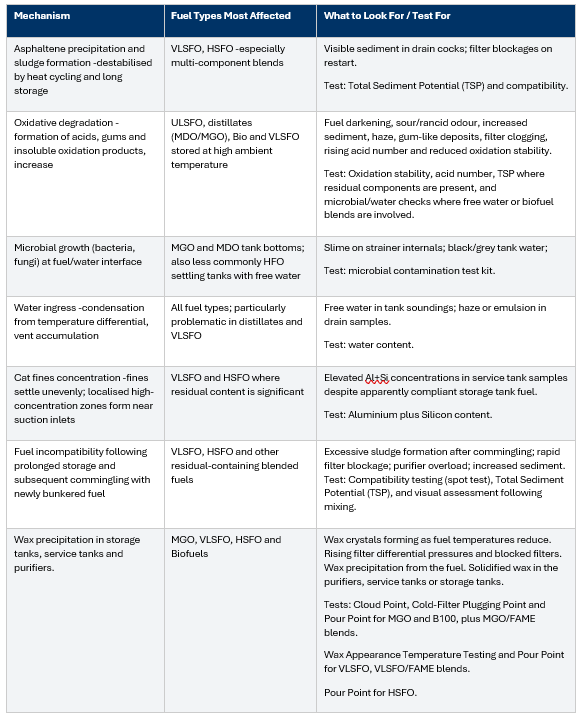
Captain Rahul Choudhuri, President of Strategic Partnerships at marine fuels testing company VPS, on Monday (8 June) offered insight and advice on how to manage fuel quality onboard idle vessels in the Gulf region: The Current Situation Since the closure of the Strait of Hormuz to most commercial shipping in late February 2026, an estimated 1,550 vessels, carrying approximately 20,000 seafarers, have been unable to transit, or have chosen to remain at anchor in the Arabian Gulf, Gulf of Oman, and approaches. Traffic through the Strait, which normally averages around 138 vessels per day, has fallen to near-zero on most days. The conflict began on 28 February 2026, resulting in vessels being idle for approximately 90 days. Many are expected to remain idle until a navigable resolution to the situation emerges, which cannot be predicted at this time. For vessel owners and operators responsible for such vessels, there is a need to focus on the technical consequences of extended idle upon fuel quality and what needs to be done in order to protect the vessel, crew and the environment. Fuel Quality Deterioration During Extended Idle Fuel deterioration in idle vessels is caused by a combination of time, temperature, water ingress, and inactivity. Each mechanism reinforces the others. The Arabian Gulf summer (June–September) is one of the most demanding storage environments in global shipping, with bunker tank temperatures on unshaded anchored vessels regularly reaching 50–55°C. Biofuel Blends The UAE, principally Fujairah and Jebel Ali, has begun supplying ISCC-certified marine biofuel blends, primarily FAME (UCOME) blended into VLSFO, at concentrations typically ranging from B10 to B30 (10–30% FAME by volume). Vessels that bunkered Biofuel blends before going idle face additional degradation risks that do not apply to conventional fuel: FAME (UCOME) blends, may exhibit reduced storage stability. Although storage life varies, a typical shelf life is often considered to be ar
VPS highlights fuel quality management for vessels idled in Arabian Gulf, Gulf of Oman
Manifold Times
Read full article at Manifold Times →
Opens Manifold Times in a new tab