news Container Markets & tradeGeopolitical risk Splash247
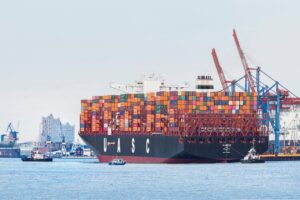
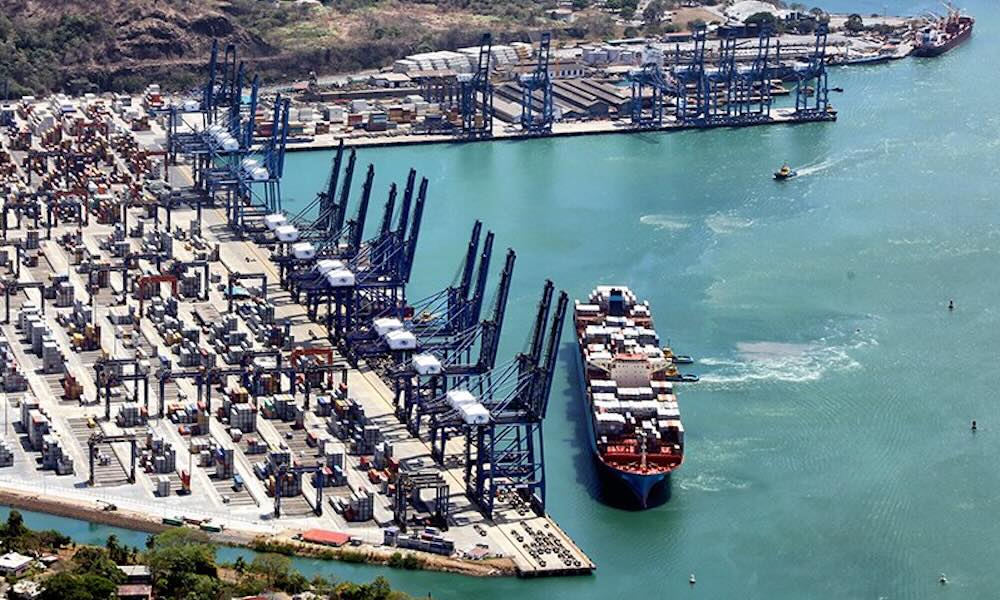
US containerised imports fell 6.8% year-on-year in January to 2.32m teu, while imports from China were down 22.7% year-on-year at 0.77m teu. Where they go from here is anyone’s guess as the US Supreme Court struck out Donald Trump’s piecemeal tariff regime as illegal. He responded by introducing a 10% universal import tariff under a different law then increased it to 15%, while his trade negotiator Jerome Greer ran around putting out fires, telling counterparties that their extant trade deals with lower tariffs would stand. The EU and India have paused their trade negotiations with the US, having just negotiated their own bilateral deal, to go with the Mercosur-EU deal also signed this year. Transpacific freight rates from China to the US west coast have unsurprisingly tumbled, registering a 31% fall over the four weeks and a 3% fall over the week to February 20, to $1,834 per feu. On the all-water service to the US east coast, rates were down 23% over four weeks and down 1% over the week to February 20, reaching $3,027 per feu. Curiously, the backhaul rate from the US west coast to China rose 12% over the four weeks to February 20 to $592 per feu, though this may only reflect higher bunker prices in California. The bin fire that is global trade policy should keep liner executives in risk-management mode The bin fire that is global trade policy should keep liner executives in risk-management mode but the ongoing newbuilding order spree indicates that shareholders’ money is as liberally redistributed as ever. So far this year, a confirmed total of 27 container ships comprising 296,500 teu has been ordered at shipyards, nearly all by Asian owners, to add to the 255 boxships ordered last year, totalling 4.33m teu. This suggests that the pace of contracting has not slowed. Perhaps the thinking has adjusted to encompass uncertain trade policy by expecting disruption to cause inefficiencies in global supply chains and thus greater demand than would exist in a more efficient system. February was notable also for the agreement that Hapag Lloyd will acquire ZIM Integrated Shipping Services Ltd, the world’s 10th largest container line. The $35.00 per share cash offer values ZIM at over $4bn – subject to Israeli government approval. Hapag Lloyd says the merged liner company will have standing capacity of over 3m teu on over 400 ships and will be able to lift more than 18m teu per year making it the world’s fifth largest liner company. As part of the deal, Israeli private equity FIMI will “take ownership of a carved-out container liner business that will serve some of the most important strategic trade-lanes, seamlessly connect to the global network of Hapag-Lloyd and in combination enhance and secure the global maritime connectivity for the State of Israel. The new container line will start with 16 modern, sizeable, and efficient vessels and take over full responsibility for ZIM’s Golden Share as well as the ZIM brand.” Meanwhile, the US dual-aircraft carrier fleet steaming towards Iran practically ensures that liners will be cautious about resuming Suez Canal transits, preferring the longer, teu-mile-day consuming route via the Cape of Good Hope. On the Asia to Med voyage, which is most affected by the south African diversion, freight rates fell 15% over the four weeks but rose in the seven days to February 20, to sit at $3,707 per feu while on the China to northern Europe voyage, freight rates fell 15% over four weeks but rose 3% over seven days
Hapag-Lloyd steals the container headlines

Splash247
Read full article at Splash247 →
Opens Splash247 in a new tab