news Tanker Geopolitical riskSafety & casualty Marine Insight
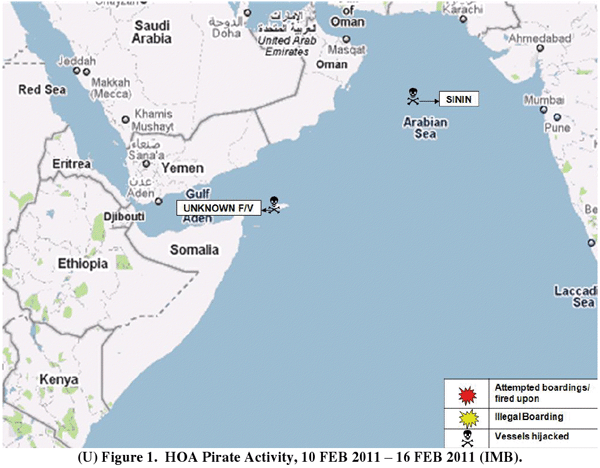
The biggest ship ever seized in the history of maritime piracy is undoubtedly the Sirius Star, a Very Large Crude Carrier or VLCC owned by Saudi Arabia. Image credits: Wikipedia The supertanker became the target of Somali pirates in open waters, which was thought to be unusual since it was away from the usual piracy hotspots close to the Gulf of Aden. The incident unfolded on November 15, 2008, when the tanker was sailing in the Indian Ocean and was 450 nm off the coast of Kenya. It was en route from Saudi Arabia to the United States by way of the Cape of Good Hope. Per reports, the pirates had travelled for three to four days to intercept the tanker, showcasing their increased operational range and planning, which shocked the maritime community and demonstrated the vulnerability of the world’s energy supplies. The Sirius Star is more than 1000 ft long and is a part of the biggest class of oil tankers, weighing 300,000 tonnes and having a draft of 17 m. When captured, it was carrying 2 million barrels of crude oil. The ship itself cost 140 million dollars to build, and the cargo could have fetched 110 million dollars, making the hijacking not only the largest by size of the vessel, but also the value of the cargo. Initially, the pirates demanded a hefty ransom of 25 million dollars to free the vessel and the crew members. However, after several rounds of negotiations, the ransom was settled at 3 million dollars, which was dropped by a small plane on the ship’s deck in January 2009. After receiving the money, the pirates left the ship, and the crew were released. However, 5 pirates drowned after their boat capsized in a storm as they attempted to leave the ship with their share of the ransom. A body, of one of the pirates, washed ashore with $153,000 in cash. However, the question was how the pirates managed to hijack a massive oil tanker. Due to the tanker’s full load, its freeboard, which is the distance from the waterline to the main deck, was quite low, about 9 m, which made it easy for pirates to climb aboard using ropes and ladders and other equipment. Per the testimony of second officer James Grady, the pirates managed to climb the tanker in just 7 minutes and took the crew members by surprise on what they thought was a safe stretch of the ocean. The tanker had a 25-member crew, who were taken as hostages. The crew did not resist the pirates, a standard protocol in such situations to avoid escalation and ensure safety. During the 55-day ordeal, the crew members were kept in a room, but were safe. The ship’s operator maintained communication and worked towards a safe return of all the crew members. Aftermath Upon being released, the Sirius Star sailed to Fujairah in the UAE, and its crew was replaced. The incident had serious repercussions and showed the increasing range and boldness of the Somali Pirates, who were operating beyond the reach of naval patrols. The incident shocked the entire shipping industry and led to a rise in international naval patrols and anti-piracy operations. Till now, the region is not free from maritime piracy. In December 2023, a bulk carrier called MV Ruen was hijacked in the Indian Ocean, marking the first successful boarding of a commercial vessel by Somali pirates since 2017. It was freed after an operation by the Indian Navy in March 2024, which led to the capture of 35 Somali pirates and the rescue of the crew members. In March 2024, another Bulk Carrier, MV Abdullah, was hijacked around 600 nm off
Biggest Ship Seizure in the History of Maritime Piracy

Marine Insight
Read full article at Marine Insight →
Opens Marine Insight in a new tab