news Operational risk Hellenic Shipping News
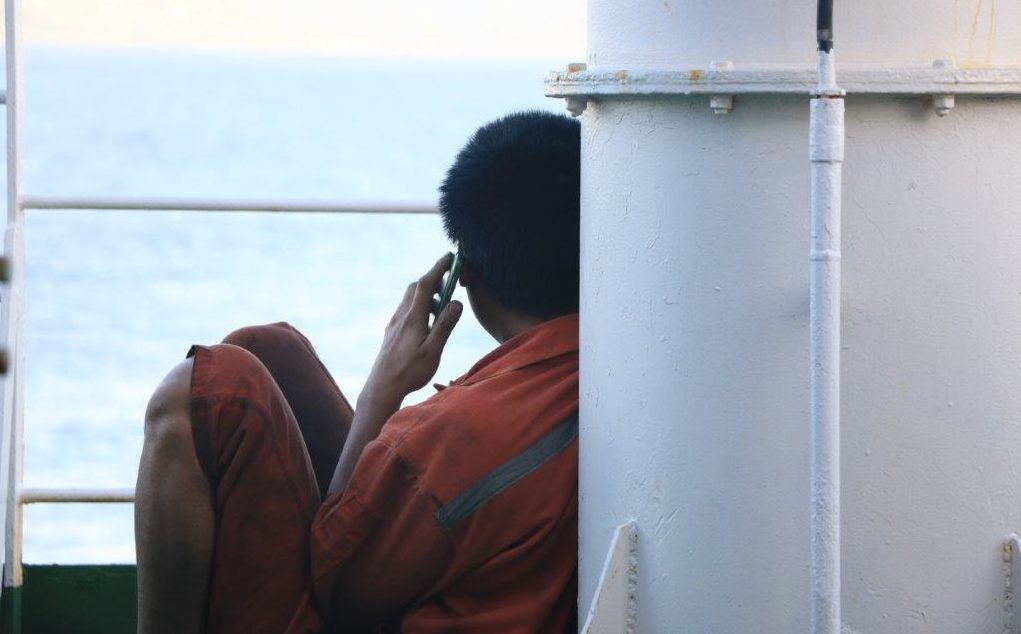
Shore Leave: Rare, Brief and in Danger of Extinction in International Shipping News 08/01/2026 A new report from the ITF Seafarers’ Trust (ITFST) and the World Maritime University (WMU) highlights the continuing absence of shore leave for the world’s seafarers. Analysing the data from 5879 seafarers who responded to the ITFST’s Shore Leave Survey, WMU researchers concluded that more than a quarter of seafarers did not get any shore leave at all, and a third only got ashore once or twice during their entire contract, based on an average of 6.6 months onboard. The ITF Seafarers’ Trust opened the Shore Leave Survey in mid-2024 to test the concern that shore leave seemed to be progressively harder to access. Working with the team at the WMU to analyse the data, the resulting report seeks to give a true picture of the current levels of shore leave available to seafarers, how often it happened, how long it lasted, and to look at possible barriers. The report paints a sorry picture of access to shore leave and shore-based services. Officers were least likely to get shore leave, and seafarers on offshore vessels and tankers were the least likely to get ashore. Across all respondents, even when seafarers did get shore leave, 47% were able to spend less than 3 hours ashore and overall, 93.5% spent less than 6 hours ashore. The report also includes feedback from seafarers themselves, showing a strong depth of feeling evident from their responses to the open questions. A Turkish deck officer, after 4.5 months on board a tanker, reported “As a deck officer, most of the time, our shore leave is based on our port watch schedule and chief officers’ approach to officers; while having 6 on 6 off watch it is almost impossible to go out without making another officer take your watch for a couple of hours, and after you are back in port you have to take night watch which makes it hard to stand. […].” The data shows that the barriers to shore leave are multiple and systemic: minimal crewing and high workloads, increasing inspections, port security and operational efficiencies leading to lack of time in port, lack of shore-based facilities and costs of transport. All these and multiple other issues result in a situation where the current system means that for seafarers to recuperate with shore leave is an unattainable dream in many ports. An Indian deck officer, after 6 months on board stated: “I have been working in the shipping industry since 2006. I have noticed that all the ports have slowly found ways to deny shore leave to the ship’s crew. If they can’t tell NO! straightaway, then they will impose heavy charges so that everyone automatically refuses to go ashore. Plus, the workload and the commercial pressure on senior officers are so much that they find it difficult to go ashore. Generally, oil/chemical refineries where our tankers go for loading or discharging are far away from the cities. There is nothing close by where we can go and relax a bit, have some nice food or go shopping. There are ports which force us to use boats for shore leave, and those boats are very expensive and unaffordable! After a long sailing, we feel exhausted, and it’s our right, I think, to get a shore leave.” Katie Higginbottom, Head of ITF Seafarers’ Trust said ‘This survey confirms our fears. Seafarers are not getting shore leave because it hasn’t been prioritised as essential for crew wellbeing and the safety of the vessel. This is about setting the scene, and it is stark
Shore Leave: Rare, Brief and in Danger of Extinction
Hellenic Shipping News
Read full article at Hellenic Shipping News →
Opens Hellenic Shipping News in a new tab