news Tanker Geopolitical riskMarkets & trade Splash247
The global tanker market is grappling with fresh uncertainty after the arrest of Venezuelan president Nicolás Maduro in a dramatic US military operation over the weekend, an event that has effectively frozen the country’s oil exports and reinforced Washington’s hardline approach to maritime enforcement. Speaking after the operation, US president Donald Trump said the United States intended to take charge of Venezuela “for the time being”, with a particular focus on reviving the country’s oil industry, while stressing that the embargo on Venezuelan crude remains fully in force. Trump claimed major US oil companies would eventually invest billions of dollars to rehabilitate Venezuela’s degraded infrastructure, but made clear that sanctions relief was not imminent. That message was reinforced by US secretary of state Marco Rubio, who described the current policy as an “oil quarantine” rather than a pathway to immediate normalisation. “We continue with that quarantine, and we expect to see that there will be changes, not just in the way the oil industry is run for the benefit of the people, but also so that they stop the drug trafficking,” Rubio said. He added that the blockade of tanker traffic amounted to “a tremendous amount of leverage that will continue to be in place until we see changes that not just further the national interest of the United States, which is number one, but also that lead to a better future for the people of Venezuela”. For shipping, the impact has been swift and severe. Venezuela’s crude exports, already constrained by sanctions and enforcement actions, appear to be effectively paralysed. Reuters reported that port authorities have not received departure clearance requests from tankers that had completed loading, while ship-tracking data shows vessels either stationary at berth or departing Venezuelan ports empty. Even tankers linked to Chevron, which had been operating under a specific US licence, have stopped moving. TankerTrackers.com reported that there was not a single tanker loading at Jose, Venezuela’s largest crude terminal, underscoring the scale of the shutdown. The tanker blockade has compounded operational stress at state oil company PDVSA. With storage tanks and floating storage reaching saturation, PDVSA has begun cutting output. According to a Bloomberg report, the company was preparing to shut in around 15% of national production of roughly 1.1m barrels per day, slashing Orinoco Belt output by as much as 25%. Extra-heavy crude wells in the Orinoco and Junin regions are being idled first, with further reductions planned elsewhere. Joint ventures have not been spared. PDVSA has asked Chevron-linked operations such as Petropiar and Petroboscan to reduce production, while Sinovensa, a joint venture with China’s CNPC, is preparing to shut down multiple production clusters. Volumes historically destined for China as part of debt repayment arrangements are now stranded, as Chinese-flagged tankers have stopped approaching Venezuelan ports. On the water, the effects of heightened enforcement are increasingly visible. One VLCC, the Chinese-owned Thousand Sunny, which has carried Venezuelan oil to China for years, diverted away from Venezuela and is now heading towards Nigeria. A number of other tankers previously bound for Venezuelan ports are now stationary, according to brokers and tracking data, reflecting growing caution among owners and operators facing seizure and retroactive sanctions risk. From a mar
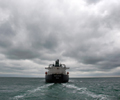
Tanker trade freezes as Maduro arrest deepens Venezuela oil paralysis

Splash247
Read full article at Splash247 →
Opens Splash247 in a new tab