news Cargo riskOperational risk Splash247
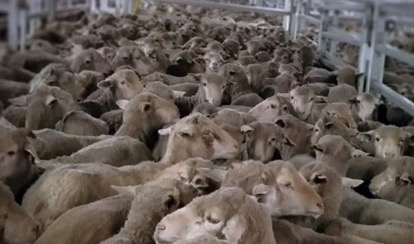
A controversial livestock carrier has finally berthed at Fremantle today. Dr Lynn Simpson assesses how this ship’s blighted voyage to the Middle East went so wrong. Third berthing a charm? Will the animals finally be allowed to get off this time? More importantly, can they stay off? The Bahijah has just tied up today in Fremantle port for the third time in two weeks after a failed attempt to carry nearly 17,000 animals to Israel was thwarted by the Houthi rebels in Yemen. A well-understood risk to shipping through that passage since November last year. The Bahijah left Fremantle on January 5, faltered on her intended course, and was ordered to return by the Australian government based on animal health and welfare concerns. I would add that health and welfare concerns for the crew sailing past Yemen, in a ship well plastered with the Israeli company name down her hull was well-founded too. I wouldn’t have been sleeping too well if I were them. So far the remaining/ surviving animals have been on board for nearly 40 days, and are right back where they started. An asinine application to continue sailing for a ridiculous additional 30 odd days, to access Israel via the Mediterranean, only after rounding the entire west coast of Africa was sensibly and commendably rejected by the Australian government on February 5. The government released a 14-page document explaining the complexities and machinations of actions and considerations that brought them to their final ‘application to re-export’ rejection. I commend their transparency. It is time the world gets to see just how much oversight is involved in the planning of each and every live animal voyage. This highlights the risky nature of the live animal trade well, and justifies why the government is keen to phase it out. As such it is no wonder the chilled and frozen meat trade that most farmers actually do rely on is never in the news as a scandal of cruelty; these risks to animals and farming reputations simply do not exist. Inside this document was one part I personally found telling. The government asked why the exporter did not execute its voyage Contingency Risk Management Plan (CRMP) to unload the animals in an alternative Middle Eastern country? A contingency one must assume was stated in the CRMP. No one has to be a geopolitical analyst to know that at no time this year was that likely to be considered a credible plan if passing the Houthi embattled area was not possible. Between my years at sea on these ships, and my time consulting with government on their export processes I have never understood how these exporter-proposed plans can be so ambiguous. The ones I have seen appear to have the robust quality of an abandoned ice slushie on a Middle Eastern summer’s day. CRMPs need to be worth the paper they are printed on. It is not good enough to essentially ‘pinky’ promise by email, that a person will source a missing piece of the voyage puzzle if required, of an appropriate, satisfactory, or applicable weasel-worded non-qualifiable component, to get a ship, her crew and the animals onboard out of a potentially life-threatening situation as needed. Usually at short notice. When things hit the fan on such voyages, plans get made up on the run and operations and communications often get very loose to say the least. I and many others have had to sail with no official notification to at least one unapproved country to cover up for poor planning and provisions mid-voyage. No – CRMP is goi
Live Animal Export: How not to export live animals
Splash247
Read full article at Splash247 →
Opens Splash247 in a new tab


