news Dry bulk Operational riskCargo risk Marine Insight
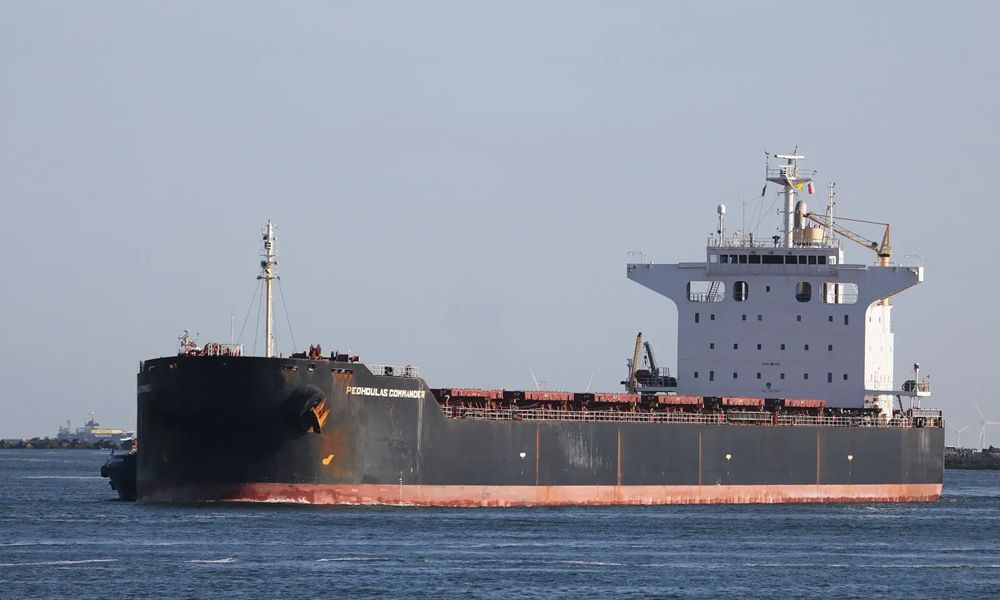
The dry bulk export market thrives on increased demand for raw materials like iron ore, coal or grain, fertilisers, etc, commodities which are loaded directly onto the cargo holds of bulk carriers. Image for representation purpose only There are specialised dry bulk terminals in ports which handle these goods. The Top 10 major ones will be discussed in this article, but before that, let’s look at the trends of the dry bulk export market. Dry Bulk Export Market Trends 2025 In 2025, this market has shown signs of contraction, influenced by geopolitical issues such as Houthi attacks on commercial shipping in the Red Sea, the Russia-Ukraine war and US-China trade tensions and tariff imposition. Asia-Pacific is a pivotal aspect in the dry bulk sector, and China is a key importer of bulk commodities. However, increased domestic production has reduced imports in recent years. The market experienced a short recovery in the second half of 2025 due to Brazil’s soybean season and China rebuilding its iron ore stocks. A few segments saw spikes because of rising chartering activity in specific trades, but the general market outlook shows low overall earnings compared to previous years. Major Dry Bulk Export Terminals 1. Port Hedland, Australia Located on the northwest coast of Western Australia, Port Hedland is the world’s biggest bulk export terminal by tonnage. It is known for exporting iron ore, but it also handles salt and lithium. It is a crucial gateway connecting the mines of Pilbara to the steel-producing centres of the world, contributing immensely to the Australian economy. The inner harbour has 12 berths, of which 4 are owned and operated by the Port Authority, 6 are owned and operated by BHP Billiton Iron Ore and 2 by Fortescue Metals Group at the Herb Elliott Port. The port is being expanded with 3 new berths that are under construction, per reports. Other exports include manganese, copper concentrate, chromite and livestock, while imports comprise general cargo, fuel, cement and sulphuric acid. Approximately 1500 ships and more than 199,000,000 tonnes of cargo are handled annually here. 2. Port Taman Dry Bulk Terminal, Russia This is a coal export facility in the Port of Taman, owned by Oteko Portservice LLC. It is the first and largest terminal for loose cargo in the Azov-Black Sea Basin of Russia. OTEKO group is a private investor which has invested in port infrastructure in southern Russia. It has already built and launched the Taman Liquid Bulk Terminal for LPG, oil and oil products. The Taman Dry Bulk Terminal opened in 2019 and has a coal capacity of 50 million tonnes per annum. It uses advanced dust control measures and can handle ships up to 220,000 DWT. The port has facilities to handle ammonia, grain, fertilisers, iron ore, sulfur, steel products, containerised cargo, liquified petroleum gases, oil and oil products, etc. It also has warehouses for 3.5 million tonnes of coal and can store 300,000 tonnes each of sulfur and mineral fertilisers. 3. Port of Qingdao, China Qingdao Port lies on the eastern shore of Jiaozhou Bay, on the northern coast of the Yellow Sea in Shandong. It has facilities for handling containers, crude oil, iron ore, coal and grain. New container berths are being developed across the bay at Qianwan to increase the port’s general cargo throughput and transhipment capacity. Image Credits: Wikipedia However, the port has significant capacity for dry bulk cargo at its Dongjiakou port area. A major facility the
Top 10 Major Dry Bulk Export Terminals In The World

Marine Insight
Read full article at Marine Insight →
Opens Marine Insight in a new tab