pi_circular Dry bulk Cargo riskOperational risk Britannia P&I
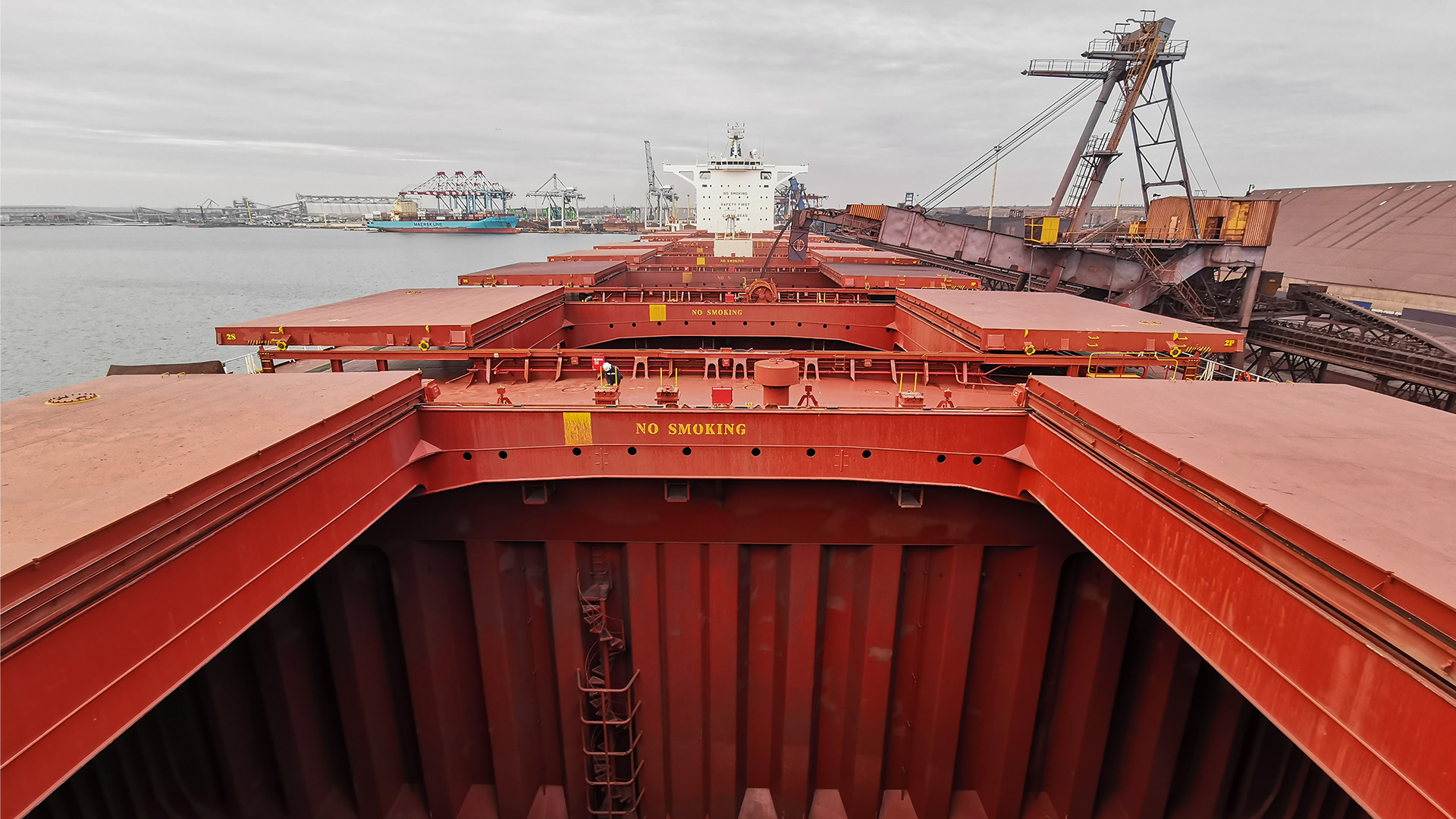
BRITANNIA LOSS PREVENTION APRIL 2026 THE VOLUME OF SEABORNE CEMENT TRADED CONTINUES TO GROW, WITH THE MOST RECENT ANNUAL FIGURE ESTIMATED TO BE OVER 145 MILLION TONNES. Cement is carried on board ships either in bulk or in bags. Bulk cement is transported on dedicated cement carriers or on bulk carriers. Dedicated cement carriers are loaded by connecting the shoreside manifold to the ship’s pneumatic system via flexible hoses, transferring cement from shore silos into the cargo holds. During discharge, a closedsystem self-unloader is used, in which compressed air fluidises the cement and the cargo is then discharged into the shore pipeline using a powerful vacuum created by a compressor. This system effectively addresses issues related to dust generation and cement hardening. However, loading cement on conventional bulk carriers, whether in bulk or in bags, presents significant operational challenges. CARRIAGE OF CEMENT CEMENT CAN STICK AND REMAIN AFTER DISCHARGE IN RECESSED AREAS OF THE TANK TOP, SUCH AS MANHOLE COVER AREAS AND ANY INDENTATIONS ON BULKHEADS. Recessed areas on the tank top should be covered with plastic sheets and secured with tape. Residues of previous cargoes, such as sugar, can affect the characteristics of cement cargo; therefore, cargo holds should be thoroughly washed and dried. Bilges should be clean, dry, and protected against ingress of cargo. CEMENT IN BULK Risk factors of loading cement in bulk include solidification of the cargo due to water ingress, mainly through hatch covers or the bilge/ballast system. Weather tightness of hatch covers, and the correct functioning of non-return valves and other valves should be ensured to prevent water ingress. Hatch cover ultrasonic sealing tests should be carried out to detect potential leakage. When cement is loaded directly from the production plant, it may have a temperature of around 110°C when leaving production. It is recommended that the loading temperature of the cement does not exceed 80°C, to reduce the chance of hold coating damage. The temperature of the cement should be measured prior to loading using an infrared thermometer. Cement should not be handled during precipitation. Weather conditions should be monitored during cargo operations, and the opening and closing times of hatch covers should be recorded. Dust generated during cargo handling is another major issue with cement cargo, especially when handling is carried out with open hatches. Precautionary measures are required to protect machinery, equipment, and accommodation spaces from dust. Scuppers should be blocked to prevent clogging caused by cement settling and hardening. Ship staff must wear appropriate personal protective equipment (PPE) to protect themselves from dust during cargo handling. FIGURE 1 Dust generated during cement handling using grabs FIGURE 2 Solidified cement on deck The main deck, pipelines, exposed equipment, and machinery should be cleaned. It is common that compressed air is used for rapid cleaning, but this must always be done with full safety precautions. All vents and accesses to the cargo holds should be sealed. The bilge system should not be operated; fixed bilge pumping systems should remain isolated, and associated valves should be sealed and recorded. Some ports employ atomised water mist cannons during openhatch discharge of cement as an effective measure to control cement dust. This system should be closely monitored while in use to ensure proper operation and to
Britannia Loss Prevention Guidance Carriage of Cement
Britannia P&I
Read full article at Britannia P&I →
Opens Britannia P&I in a new tab