news Geopolitical riskOperational risk Marine Insight
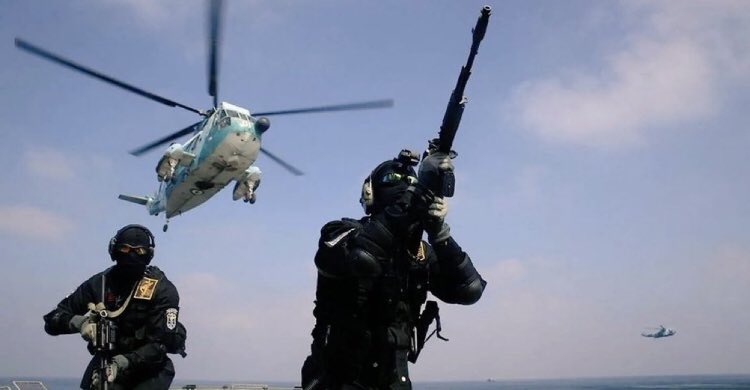
Image Credits: US Centcom The U.S. military said it carried out retaliatory strikes against Iranian military targets after three American Navy destroyers were attacked while transiting the Strait of Hormuz on May 7. According to U.S. Central Command (CENTCOM), Iranian forces launched multiple missiles, drones and small boats at USS Truxtun (DDG 103), USS Rafael Peralta (DDG 115), and USS Mason (DDG 87) as the vessels moved through the international sea passage towards the Gulf of Oman. CENTCOM said no U.S. military assets were struck during the incident. American forces intercepted the incoming threats before carrying out strikes on Iranian facilities that were allegedly involved in the attacks. The U.S. military said the retaliatory operation targeted missile and drone launch sites, command and control locations, and intelligence, surveillance and reconnaissance nodes linked to the attacks on American forces. CENTCOM described the Iranian actions as “unprovoked hostilities” and stated that the strikes were conducted in self-defence. The command added that it did not seek escalation but remained prepared to protect U.S. personnel and assets in the region. Earlier on Thursday, Iran’s top joint military command accused the United States of violating a ceasefire by targeting an Iranian oil tanker and another vessel entering the Strait of Hormuz. Iranian authorities also alleged that U.S. strikes had hit civilian areas. The latest exchange marked another confrontation between the two countries since a ceasefire was announced on April 7, pausing full-scale warfare between Washington and Tehran. Earlier this week, the U.S. military said it had destroyed six Iranian small boats and intercepted Iranian cruise missiles and drones during operations linked to maintaining shipping movement through the Strait of Hormuz. Washington was also awaiting Iran’s response to a U.S. proposal aimed at formally ending the conflict. According to the source material, the proposal would leave several major disputes unresolved, including disagreements over Iran’s nuclear programme and the reopening of the Strait of Hormuz. Before the conflict, the strategic waterway handled around one-fifth of the world’s oil and gas supply, making it one of the most important maritime trade routes globally. References: US Centcom, Reuters Disclaimer : The information on this website is for general purposes only. While efforts are made to ensure accuracy, we make no warranties of any kind regarding completeness, reliability, or suitability. Any reliance you place on such information is at your own risk. We are not liable for any loss or damage arising from the use of this website. Related Posts Supertanker Carrying Iraqi Crude To Vietnam Resumes Voyage After US Navy Hold-Up Near Hormuz European Countries Begin Talks With Iran Over Strait Of Hormuz Ship Passage China’s AI-Controlled USVs Could Strengthen Maritime Surveillance In Disputed Waters New Type Of Floating Wave Energy Converter Deployed At Biscay Platform For Testing & Research Related Posts Supertanker Carrying Iraqi Crude To Vietnam Resumes Voyage After US Navy Hold-Up Near Hormuz European Countries Begin Talks With Iran Over Strait Of Hormuz Ship Passage China’s AI-Controlled USVs Could Strengthen Maritime Surveillance In Disputed Waters Disclaimer : The information on this website is for general purposes only. While efforts are made to ensure accuracy, we make no warranties of any kind regarding completeness, reliabili
U.S. Navy Carries Out Retaliatory Strikes Against Iranian Targets After Attack On 3 Destroyers

Marine Insight
Read full article at Marine Insight →
Opens Marine Insight in a new tab