casualty_report Container Safety & casualtyOperational risk Marine Insight
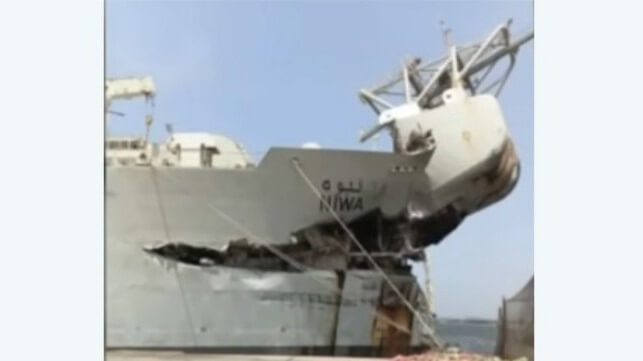
A large container ship was inbound and a port pilot embarked for docking. Before boarding, the pilot had decided to upgrade the two tugs to be used for more powerful ones because the vessel was in ballast. He did not discuss this or his other docking plans with the Master, nor did the Master discuss his expectations of the docking with the pilot. As they entered the inner harbour at about 9.5 knots, the pilot ordered a turn to starboard to bring the vessel parallel with the berths. Starboard 10 was requested but the vessel turned more slowly than expected. Starboard 20 was requested and soon after hard starboard. When the vessel came parallel with the berths, the wind was now on the starboard side at Beaufort 4-5 and pushing the vessel to port. The vessel’s large freeboard afforded ample windage, so the force to port was considerable. The pilot soon realised that emergency action was needed as the vessel was approaching the berths with momentum to port at a speed of more than five knots. Tugs and the bow thruster were used to try and slow and turn the vessel, but contact was now inevitable. Emergency manoeuvres and some luck avoided contact with the berthed vessel aft, but the port bow of the container ship struck a gantry crane on the pier, which quickly collapsed. As the vessel came away from the pier, it struck another berthed vessel forward. The investigation later established that, at the time of the accident, the propeller had an immersion ratio of about 68%. Lessons learned Poor planning and an underestimation of the vessel’s manoeuvring characteristics in ballast were major contributors to this accident. Another important factor was the speed of entry, which left no room for error or manoeuvring underperformance, which is to be expected with low draft high freeboard situations. Higher speeds also make bow thruster performance negligible and tug assistance more tenuous. Not only are the turning characteristics of a rudder negatively affected by being less than fully immersed, the effects of the propeller are also reduced. Carefully consider these effects and discuss with the pilot to arrive at a common plan prior to port entry or exit. The pilot upgraded the power of the tugs in attendance prior to boarding the vessel which indicates his concern for the limitations he expected. Notwithstanding these concerns, his docking plan was not discussed with the Master and the ’one man show’ was a catastrophic failure. Disclaimer : The information on this website is for general purposes only. While efforts are made to ensure accuracy, we make no warranties of any kind regarding completeness, reliability, or suitability. Any reliance you place on such information is at your own risk. We are not liable for any loss or damage arising from the use of this website. Related Posts Real Life Incident: Collision Of Container Ship and General Cargo Ship Leads To Sinking And Fatalities Real Life Incident: Collision and Sinking of Small Craft in Shipping Lane Real Life Incident: Crew Saved but Ship Lost Real Life Incident: Pin Holes Create Pathway To Fatal Reckoning Related Posts Real Life Incident: Collision Of Container Ship and General Cargo Ship Leads To Sinking And Fatalities Real Life Incident: Collision and Sinking of Small Craft in Shipping Lane Real Life Incident: Crew Saved but Ship Lost Disclaimer : The information on this website is for general purposes only. While efforts are made to ensure accuracy, we make no warranties of any kind rega
Real Life Incident: Not So Slow Crane Wreck

Marine Insight
Read full article at Marine Insight →
Opens Marine Insight in a new tab